In landscaping, slope stabilization, and site revegetation projects, achieving large-scale, efficient, and cost-effective vegetation establishment alongside erosion control remains a core industry challenge. Traditional manual seeding methods suffer from low efficiency and uneven coverage, while sod installation is costly and offers poor adaptability.Hydraulic spraying technology emerges as the preferred solution due to its unique advantages: utilizing nutrient-rich slurry as the core material, it achieves rapid coverage and high germination rates through precise application by specialized equipment. This article comprehensively analyzes this innovative technology, covering its core principles, operational procedures, advantages, and application scenarios.

I. What is Hydroseeding?
Hydraulic spraying (Hydroseeding) is a vegetation establishment technique that uses specialized spraying equipment to uniformly apply a slurry mixture—containing cover materials, seeds, fertilizers, soil conditioners, and dyes—to areas requiring greening. Compared to traditional manual seeding, its defining feature lies in combining "seed cultivation" with "precision delivery." The slurry provides seeds with an initial "nutrient-rich environment" for growth while enabling rapid, large-scale coverage through equipment.
The core value of this technology manifests in three key aspects: First, exceptional efficiency—a single hydraulic hydroseeder can complete thousands of square meters of spraying per day, far surpassing manual sowing rates. Second, high germination rates—the mulch in the slurry locks in moisture and protects seeds, while nutrients from fertilizers boost germination rates to over 80%.Third, it offers strong adaptability. Whether applied to flat residential lawns, expansive sports fields, or steep mountain slopes, ideal results can be achieved by adjusting the slurry formula and spraying parameters. Today, hydraulic spraying has become the mainstream innovative technology replacing traditional methods like manual seeding and sod laying.
II. When and where did hydroseeding start?
As a breakthrough technology in vegetation establishment, hydraulic spraying emerged in response to the dual demands for "efficient greening" and "erosion control."Early traditional greening methods relied on manual seeding, which was labor-intensive and struggled to ensure seed retention on complex terrains like slopes and hillsides, often failing due to rain erosion. While sod installation offered quick results, it was costly and suffered from poor root integration with native soil, leading to long-term instability.
Hydraulic spraying technology effectively addresses these challenges. Leveraging the advantages of "slurry-based seed fixation combined with high-efficiency spraying," it has expanded from niche applications to widespread use across residential, commercial, and industrial sectors.Today, traces of hydraulic spraying technology can be seen in parks, football fields, highway slopes, and mine reclamation sites—it has become the preferred solution balancing "greening efficiency," "cost control," and "environmental adaptability."
III. What is the hydroseeding process?
The core of the hydraulic spraying machine construction method lies in "precise preparation + scientific spraying." The entire process can be divided into three critical stages, each directly impacting the final greening outcome.
Stage One: Pre-Construction Soil Preparation—Laying the Foundation for Greening
Soil forms the foundation for vegetation growth. Only by optimizing soil conditions in advance can seeds germinate and thrive after spraying. This stage primarily involves three steps:
1. Soil Testing: Professional analysis determines nutrient levels, pH, and other indicators to identify deficiencies in key elements like nitrogen, phosphorus, and potassium. This informs subsequent slurry formulation adjustments. For instance, in nutrient-poor soils, slow-release fertilizers are added to the slurry; in acidic soils, pH-adjusting agents like lime are incorporated.
2. Site Clearance: Remove weeds, gravel, construction debris, and other obstructions from the target area to prevent interference with seed germination and root development. For slopes, perform preliminary soil leveling to minimize slurry runoff caused by abrupt gradient changes.
3. Soil Improvement: Based on test results, apply base fertilizer or soil conditioners (e.g., humus, perlite) to the topsoil layer. Use a rotary tiller to thoroughly mix these with the surface soil, enhancing water retention and nutrient-holding capacity.
Phase Two: Slurry Preparation for Spray Application—The Core Function of Hydraulic Sprayers
The slurry mixture ratio directly determines seed germination rates and growth quality, with the hydraulic sprayer playing a critical role in achieving precise mixing during this stage. The specific process is as follows:
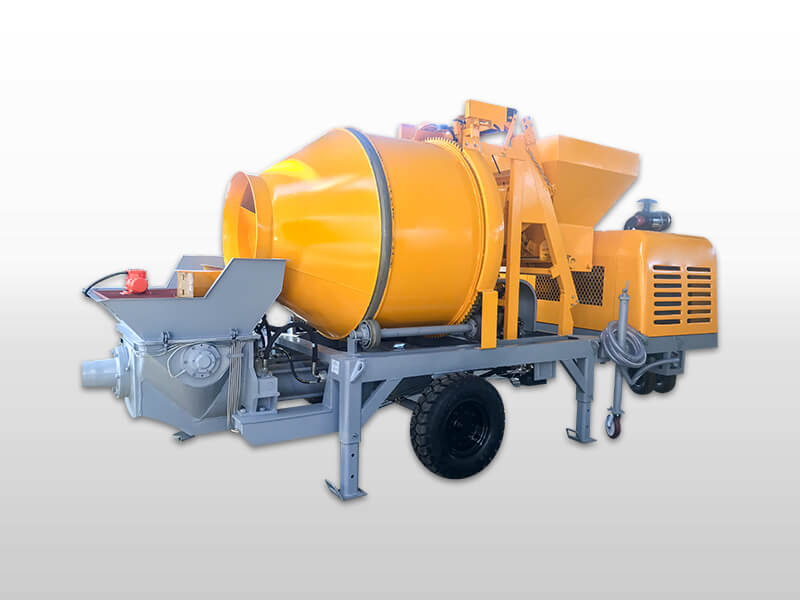
1. Equipment Calibration: Adjust the hydraulic sprayer's mixing speed, spray pressure, and other parameters based on the construction area and terrain to ensure uniform slurry mixing and adequate spray coverage.
2. Material Loading: Follow the sequence "liquids first, solids second; base materials before additives" — first add an appropriate amount of clean water to the sprayer's water tank, then sequentially add seeds, mulch, fertilizer, and binding agent, finally adding the dye. The dye serves to visually indicate the spray coverage, preventing missed or overlapping spraying.
3. Homogeneous Mixing: Activate the sprayer's mixing system to thoroughly blend all materials in water, forming a uniform slurry. Continuously monitor slurry concentration during mixing to prevent excessive thinning (causing seed settling) or excessive thickness (blocking spray lines).
Stage Three: Mechanical Spraying and Post-Application Care
During spraying, prioritize "even coverage" and "depth control" to ensure seeds germinate in optimal conditions. Operators should drive or stabilize the hydraulic sprayer, maintaining a 1.5-2 meter distance between the nozzle and ground. Move at a steady pace using a fan-shaped spray pattern, controlling the spray thickness between 0.5-1 cm. For steep slopes, use high-pressure nozzles or segmented spraying to prevent slurry runoff.
After spraying, perform basic post-application maintenance: Keep the soil moist for the first two weeks (using misting if necessary), avoiding intense sunlight or rain erosion. Once seedlings reach 5-10 cm in height, apply appropriate top dressing fertilizer to promote robust growth.
IV. Composition of the Hydroseeding Mixture
The spray mixture is the "soul" of hydraulic spraying technology, scientifically formulated from multiple components. Each component performs a unique function, collectively ensuring seed germination and growth.
1. Seeds: Precise Selection Based on Site Conditions
Seed selection must align with project requirements, local climate, and soil conditions. Common seed types include: cool-season grasses like Kentucky bluegrass and ryegrass for residential lawns; drought-tolerant, deep-rooted grasses like Bermuda grass and tall fescue for slope protection; and wildflower or native plant seeds for ecological restoration to enhance adaptability.Seed purity must exceed 95%, with a germination rate of at least 85% to ensure effective greening outcomes.
2. Seed Cover: The Protective Barrier
Mulch is a critical component of seed slurry, primarily functioning to retain moisture, prevent seed erosion from rain, and provide a mild environment for seed germination.Common cover materials include wood fiber mulch (high water retention, suitable for arid regions), blended mulch (balances water retention and aeration), and paper pulp mulch (rapid degradation, ideal for short-term greening needs). Application rates should be adjusted based on terrain, with increased coverage on slopes to enhance stabilization.
3. Fertilizers and Soil Conditioners: Providing Growth Energy
Fertilizers supply essential nutrients for seed germination and seedling growth. Balanced compound fertilizers with equal nitrogen, phosphorus, and potassium ratios are typically used, or specialized fertilizers are added to address specific soil deficiencies (e.g., urea for nitrogen-deficient soils). Soil conditioners improve soil structure, such as adding humus to enhance nutrient retention capacity or gypsum to ameliorate saline-alkali soils.
4. Binders and Retention Agents: Ensuring Seed Retention
Binders and stabilizers enhance adhesion between the slurry and soil, preventing slurry runoff on slopes and ensuring seeds remain in optimal positions. Common binders include natural latex and polyacrylamide, requiring precise dosage control—insufficient amounts fail to stabilize, while excessive amounts may inhibit seed respiration.
V. Applications and Use Cases
Leveraging its efficiency, flexibility, and cost-effectiveness, the hydraulic sprayer construction method has gained widespread adoption across diverse sectors, including residential, commercial, and industrial applications, demonstrating exceptional adaptability.
1. Residential Lawn Establishment
For residential communities, villa gardens, and similar settings, hydraulic spraying offers a cost-effective alternative to sod installation. It reduces costs by 40%-60% compared to sod, while achieving better seed integration with native soil for stronger, healthier turf growth. Additionally, it allows for customized turf designs by selecting various grass species according to homeowners' preferences.
2. Commercial Landscaping
Commercial landscaping projects like parks, plazas, soccer fields, and golf courses demand rapid greening and large-scale coverage—needs perfectly met by hydraulic spraying.For instance, soccer field turf established with hydraulic spraying achieves full coverage within 1-2 months, featuring uniform texture and high wear resistance. Park green spaces can achieve diverse landscape effects by spraying mixtures of grass and wildflower seeds.
3. Industrial and Infrastructure Greening
Industrial and infrastructure projects like highway slopes, railway corridors, mine reclamation, and construction waste landfills prioritize "erosion control" and "ecological restoration."Hydraulic spraying technology stabilizes soil rapidly by incorporating binders and deep-rooted grass species into the slurry mixture, preventing soil erosion. For instance, applying this technique to highway slopes enables swift vegetation coverage formation, significantly reducing rainwater erosion on slopes.
4. Erosion Control and Land Reclamation
In areas with severe soil erosion, post-disaster reconstruction sites, or mine reclamation projects, hydraulic spraying is the preferred solution. It rapidly establishes vegetation cover. When combined with stabilizers and mulch, it significantly reduces soil erosion rates. For instance, in mine reclamation projects, spraying native drought-tolerant plant seeds and soil conditioners can progressively restore the regional ecological environment.
VI. Hydro Seeding Safe Work Method
Hydraulic sprayer operations involve machinery handling, chemical fertilizer and pesticide use (some projects require insecticide additives), necessitating strict adherence to safety protocols. Develop a Safety Work Method Statement (SWMS) to identify risk points and control measures.
• Equipment Safety: Prior to operation, inspect the sprayer's mixing system, spraying system, and power system to ensure normal function with no leaks or malfunctions. Operators must undergo professional training, be thoroughly familiar with equipment procedures, and avoid mishandling that could cause equipment damage or personal injury.
• Chemical Safety: When handling and dispensing chemicals such as fertilizers and binders, wear protective gear including gloves and masks to prevent direct skin contact or dust inhalation. Store chemicals separately, away from water sources and food, to prevent contamination.
• Site Safety: Install guardrails and warning signs during slope construction to prevent falls. Avoid pedestrians and vehicles during spraying operations to prevent slurry splashing onto bystanders.
VII. Comparing Hydroseeding with Other Methods
Compared to traditional methods like manual seeding, sod laying, and broadcast seeding, hydraulic spraying demonstrates significant advantages in efficiency, cost, and effectiveness. Specific comparisons are as follows:
|
Comparison Dimension |
Hydraulic Spray Seeding Method |
Manual Seeding |
Sod Laying |
|
Construction Efficiency |
High (covers thousands of square meters per day) |
Low (covers tens of square meters per day) |
Moderate (requires manual laying, limited efficiency) |
|
Cost |
Low (approximately 40%-60% of sod installation) |
Low (but requires repeated seeding, resulting in high long-term costs) |
High (high costs for turf procurement and installation) |
|
Germination rate |
High (80% or above) |
Low (30%-50%, susceptible to environmental factors) |
High (though turf survival rate is affected by transplanting) |
|
Adaptability |
Strong (suitable for all terrain types) |
Weak (poor performance on complex terrains like slopes) |
Weak (difficult to install on slopes, prone to detachment) |
|
Erosion Control Effectiveness |
Strong (slurry soil stabilization + vegetation root anchoring) |
Weak (Seeds prone to being washed away) |
Moderate (effective short-term, poor long-term root integration) |
VIII. What are the advantages of Hydroseeding?
Based on the above analysis, the hydraulic sprayer method has become a mainstream greening technology due to its four core advantages: efficiency, cost-effectiveness, effectiveness, and adaptability:
1. High Efficiency and Speed: Strong large-area coverage capability significantly shortens greening timelines, making it particularly suitable for projects with tight schedules; seeds germinate rapidly, typically within 7-10 days, with turf establishment completed in 1-2 months.
2. Cost-Effective: Both material procurement and labor costs are lower than traditional methods like sod laying. Post-construction maintenance is simple, reducing long-term investment.
3. Stable Results: The slurry provides comprehensive protection for seeds, ensuring high germination and survival rates. The vegetation integrates well with native soil, resulting in robust growth and long-lasting greening effects.
4. Adaptability: The slurry formula can be customized for diverse terrains, climates, and project requirements, making it suitable for residential greening, commercial landscaping, industrial erosion control, and other applications.
Amidst the industry trend toward "high efficiency, ecological sustainability, and low cost," hydraulic spraying technology has emerged as the preferred method for diverse vegetation establishment projects due to its unique technical advantages, gradually replacing traditional approaches. Its scientific process, flexible formulations, and reliable outcomes adapt to varied needs like residential lawns and slope stabilization. For landscape contractors and developers, mastering this technology enhances project competitiveness, achieving a win-win for ecological and economic benefits.



 Email:info@gaodetec.com
 .jpg)
.jpg)