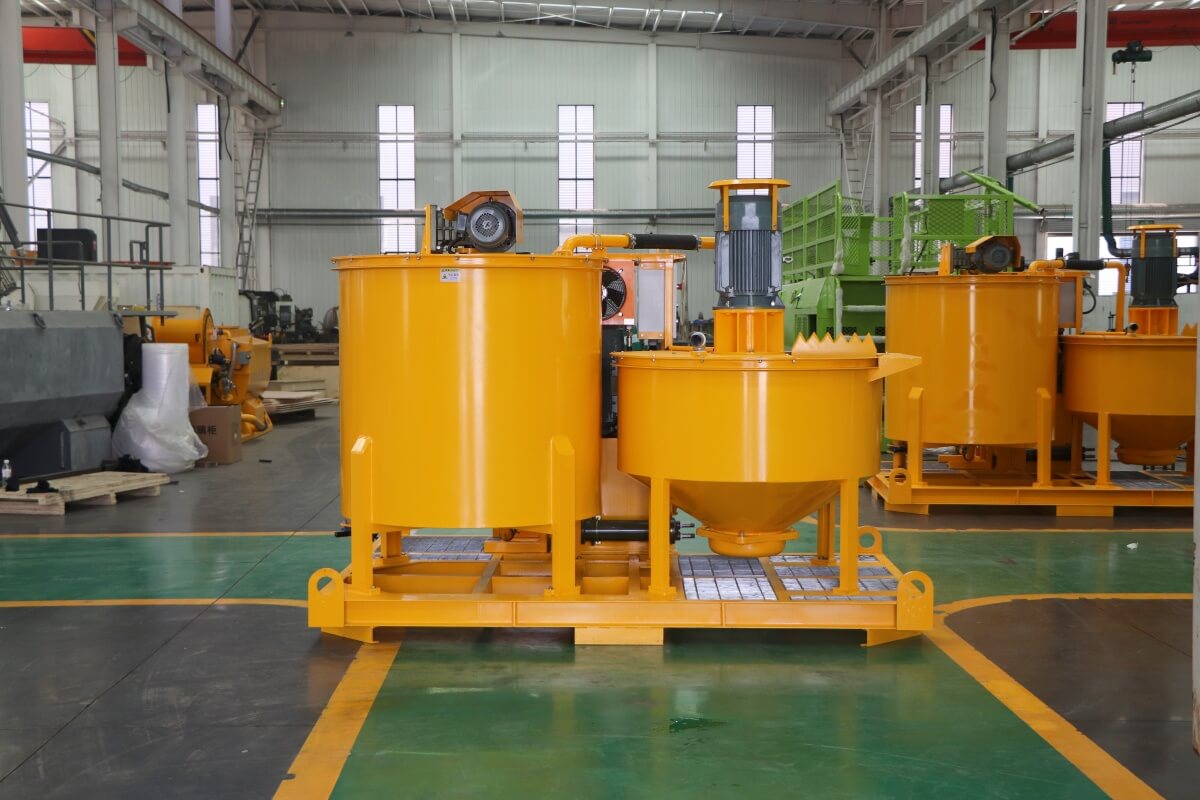
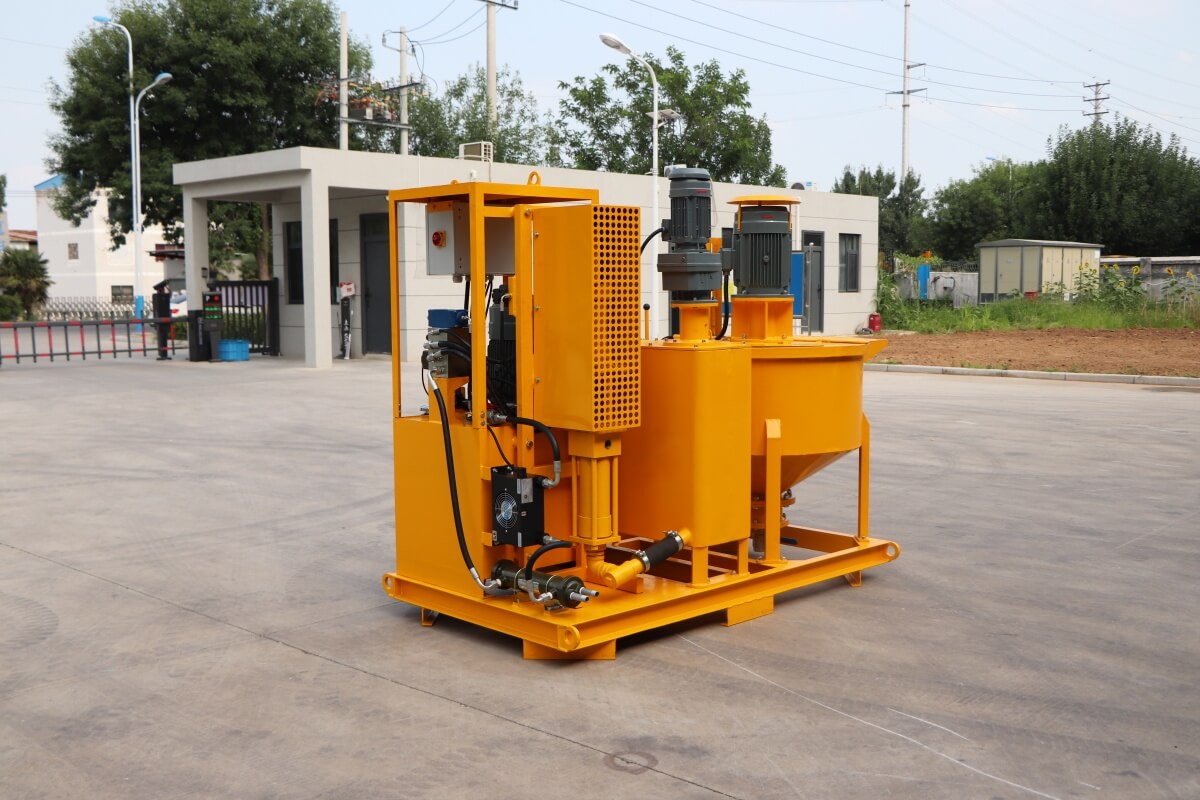
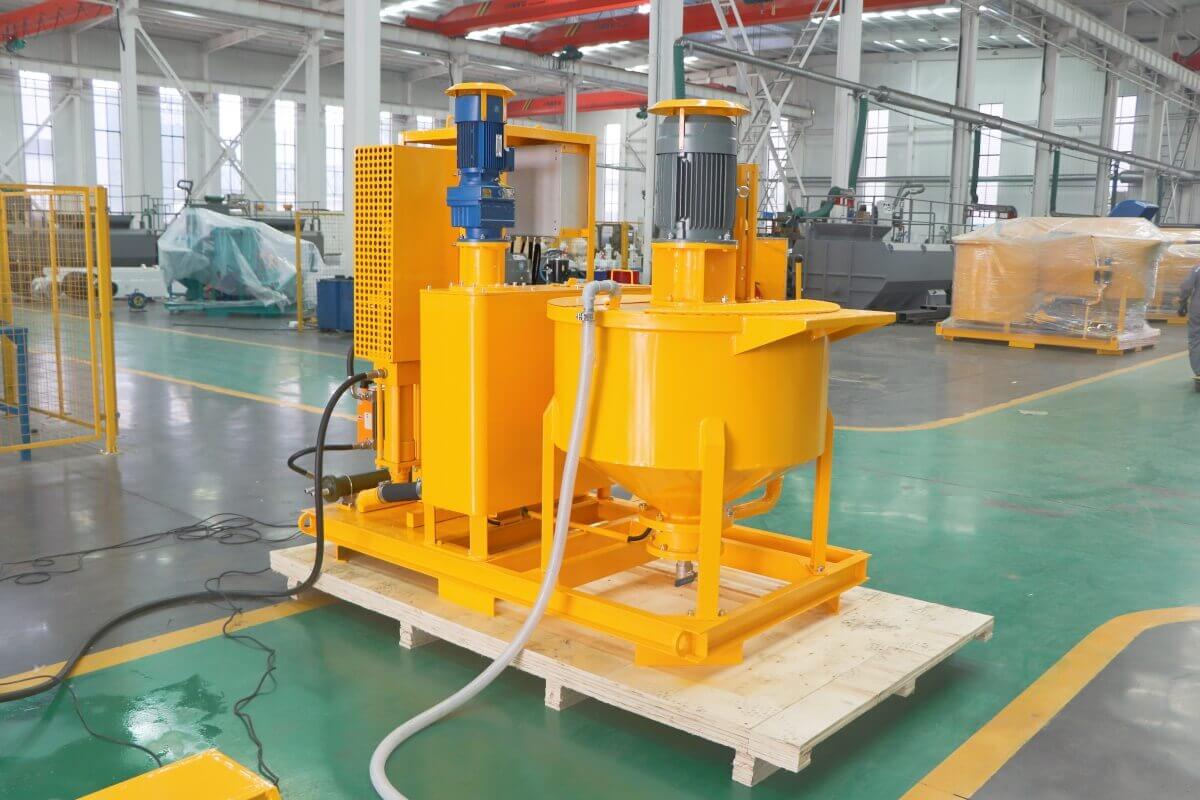
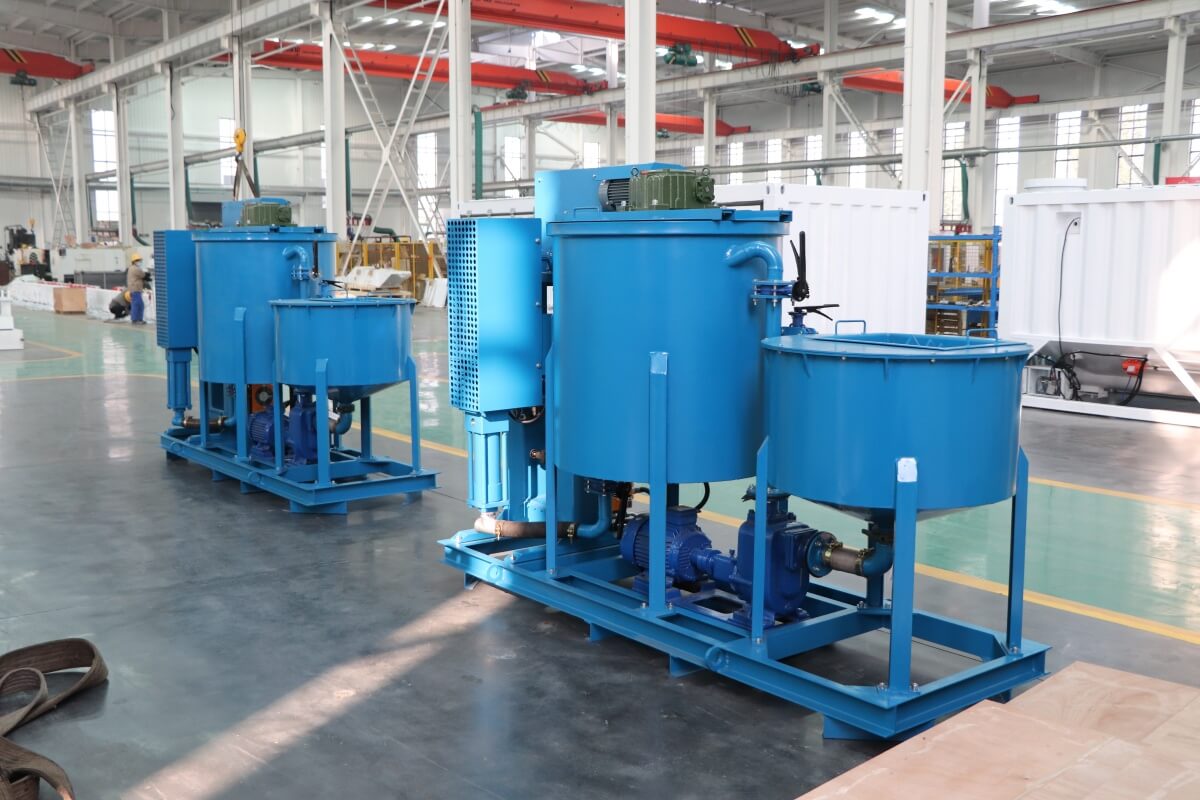
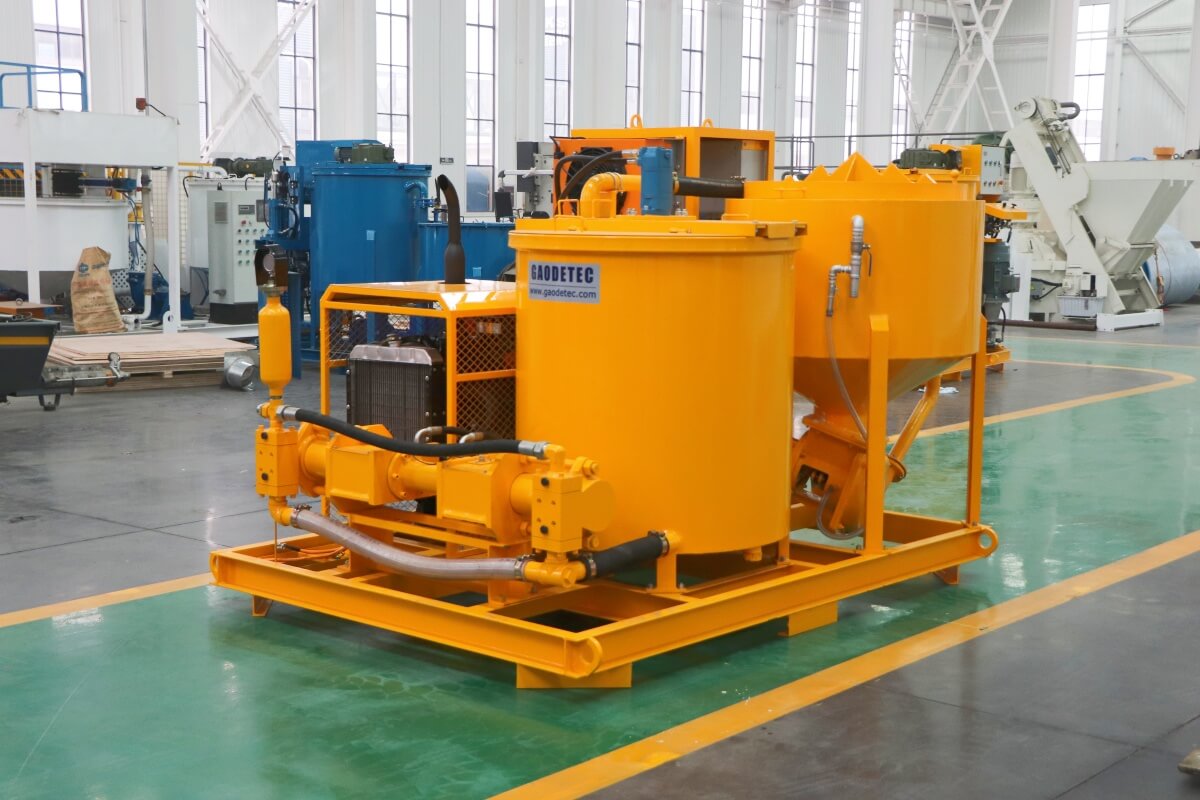
Our integrated grout mixing and pumping station combines mixing, agitation, and grout injection in one compact system. Configured to suit cement, bentonite, or microfine cement grouts, it supports ground anchoring, foundation improvement, and seepage control projects. Mixing capacity, pump output, and working pressure can be customized to meet your application requirements.
The Grout Mixing and Pumping Station integrates grout mixing, storage/agitation, and high-pressure pumping functions onto a single equipment platform, enabling the continuous production of high-quality, consistent cement grout and its delivery to micropile boreholes at preset pressures. Featuring a compact design and ease of operation, it is suitable for new foundation construction, underpinning of existing structures, bridge rehabilitation, and foundation reinforcement projects with space constraints. In micropile construction, the cement grout serves not only to fill the borehole void but also plays a critical role in bonding the reinforcement (steel bars or pipes) to the surrounding ground. The uniformity and fluidity of the grout, as well as the stability of the injection process, directly influence the structural integrity, bond strength, and load-bearing capacity of the micropiles.
Compact grout injection station is an integrated, space-saving system that combines a high speed mixer, storage tank (agitator), and grout pump in a single base frame—typically occupying less than 5 square meters and can be operated by one person.
The main applications of cement grout pump stations include: Foundation reinforcement: Grouting for foundations in dams, tunnels, mines, etc., to improve bearing capacity. Structural repair: Reinforcement of buildings and bridges, foundation lifting, soil compaction grouting, etc. Underground engineering: Tunnel lining, contact grouting, and tunnel waterproofing. Marine engineering: Underwater foundations, wharf scour protection, shoreline reinforcement, etc.
The grout pump and mixing station is an integrated device combining a mixer, mixing tank, and grouting pump. It injects cement-based or chemical grout into strata, structural fissures, or soil and rock masses under high pressure to achieve reinforcement, seepage prevention, or filling functions. Its working principle can be divided into three stages: 1. Cement grout preparation: A high-speed vortex mixer rapidly mixes cement, bentonite, and water, forming a homogeneous grout within 10 seconds, preventing particle sedimentation. 2. Cement grout storage: The mixing tank continuously agitates the grout to prevent solidification and ensure a continuous supply. 3. High-pressure grouting: A hydraulically driven pump generates high pressure through piston or plunger movement, injecting the grout into the target area. The pressure range is 0-45 Bar (some models reach 0-100 Bar), and the flow rate is 0-100 L/min.
*Please enter a message to us