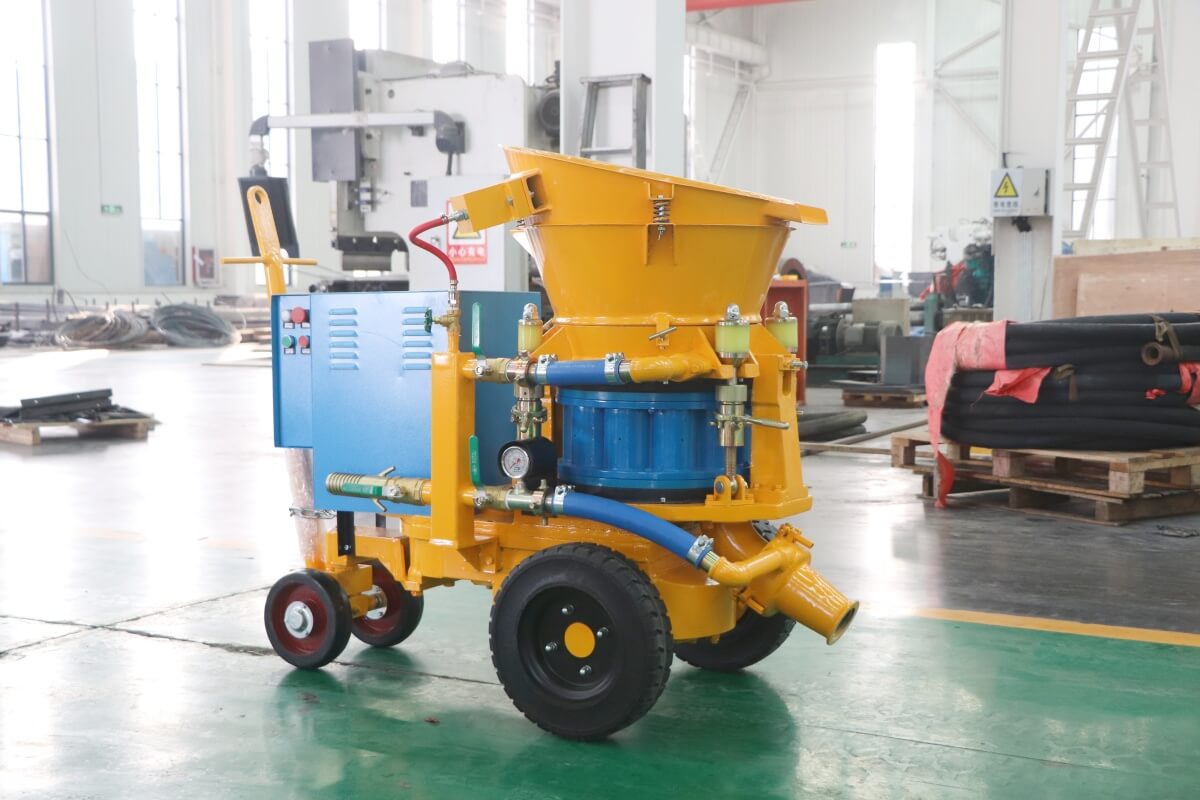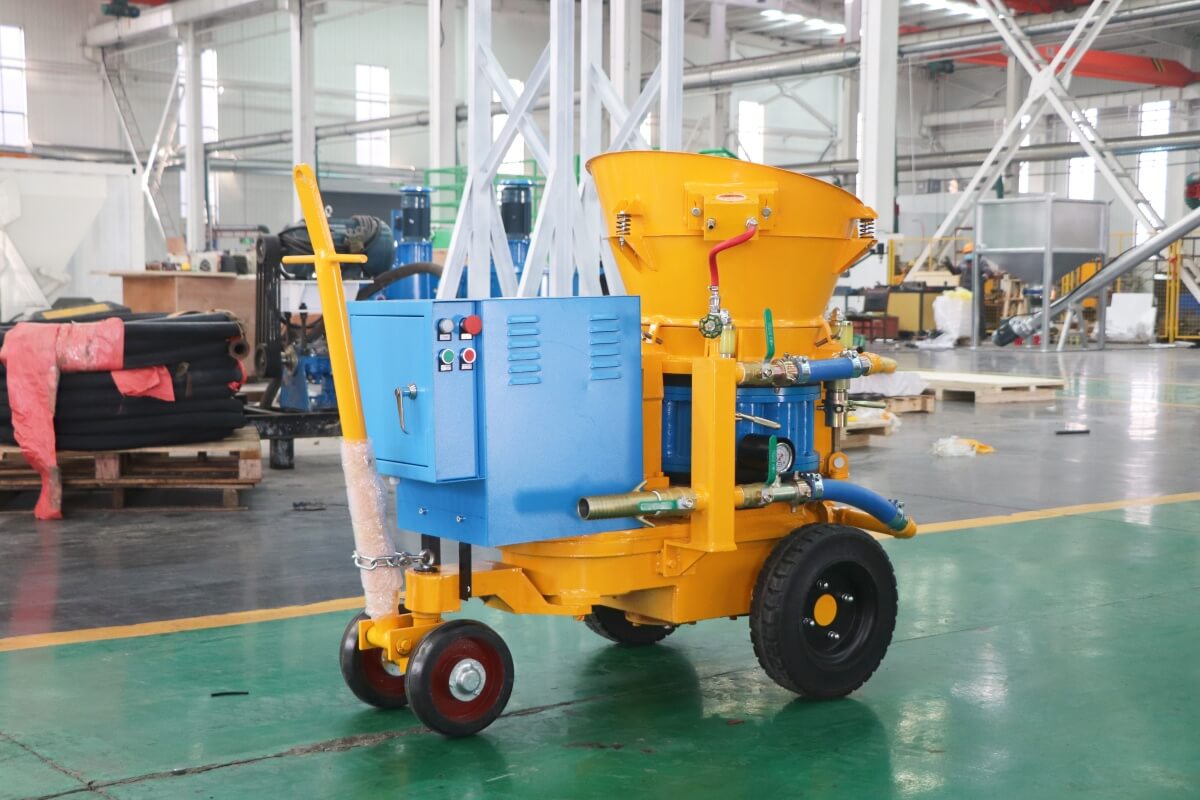
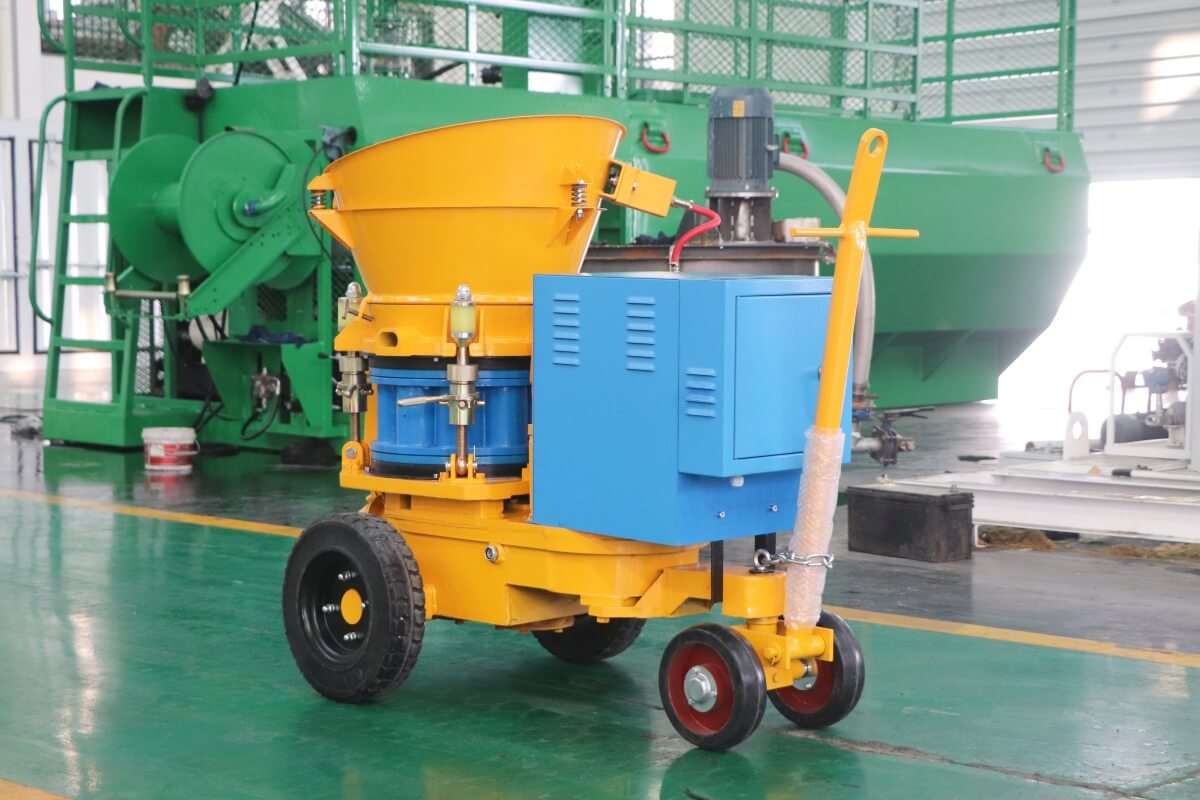
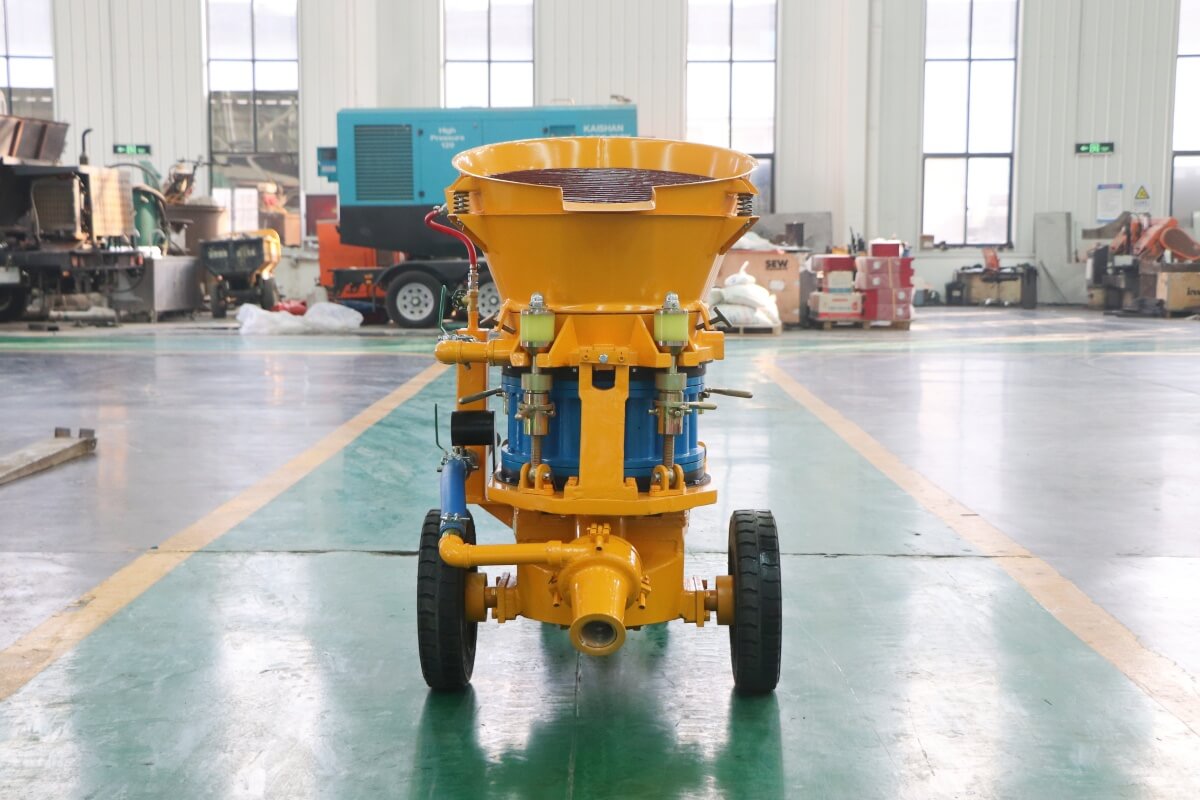
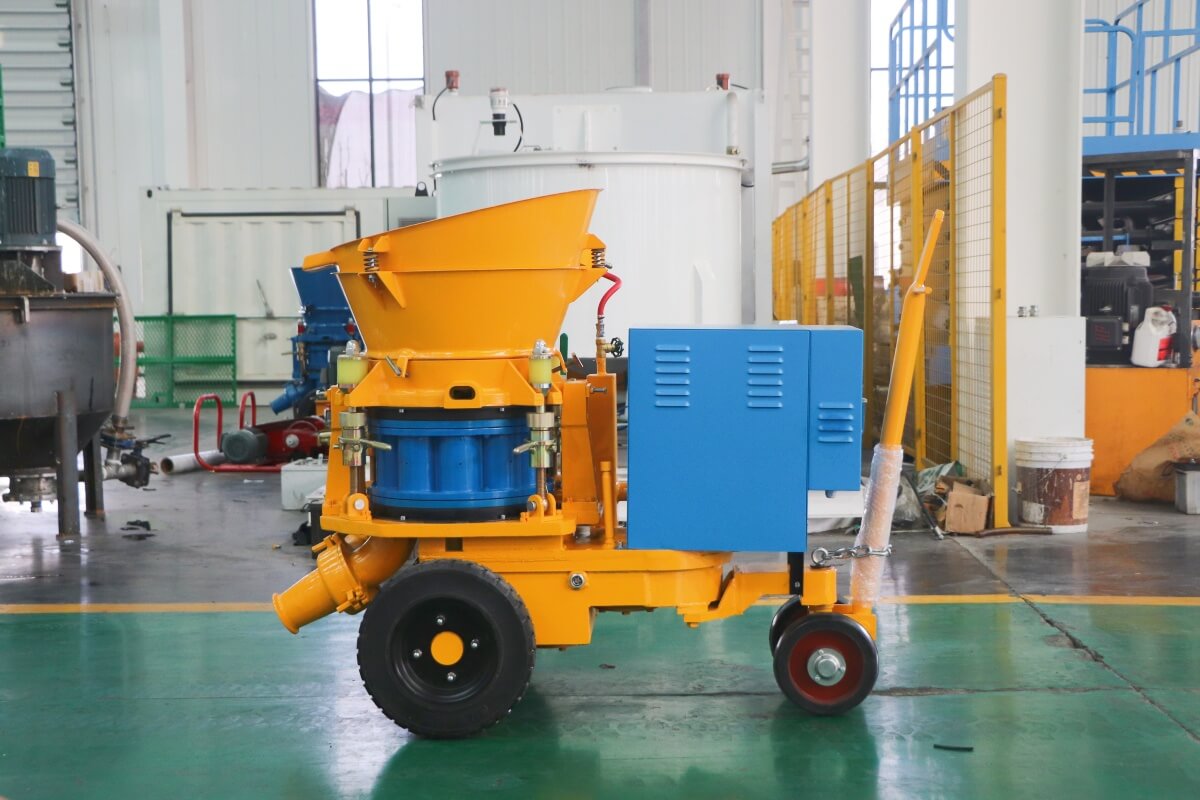
Small size concrete spraying machine
A small size concrete spraying machine (mini shotcrete machine) is a compact, mobile piece of construction equipment designed to pneumatically spray concrete onto vertical, sloped, or overhead surfaces for lining, repair, or slope stabilization. It is ideal for narrow spaces, small projects, and locations with limited access where large machines are impractical.
What is a Small-Size Concrete Spraying Machine?
In construction, mining, and road repair engineering, shotcrete application is a core process for ensuring structural strength and improving construction efficiency. Small-size concrete spraying machines, as lightweight and highly adaptable construction equipment, are gradually replacing traditional large equipment and becoming the preferred choice for small to medium-sized projects and complex working conditions.
Simply put, a small-size concrete spraying machine is a specialized piece of equipment that uses high-pressure airflow or hydraulic power to evenly spray concrete (or mortar) onto the work surface, achieving rapid shaping and reinforcement. Its core advantage lies in its “small and precise” design—compact size, easy mobility, and rapid deployment without the need for large hoisting equipment. It balances construction efficiency and project quality, meeting the needs of conventional spraying operations while also being adaptable to narrow spaces inaccessible to large spraying machines (such as small tunnels, indoor repairs, and foundation pit sidewalls).
Compared to large shotcrete machines, smaller equipment emphasizes “flexible adaptability” and “cost control,” and is widely used in various small and medium-sized projects. Whether it’s wall spraying in civil buildings, support in mine tunnels, or repair and reinforcement of old facilities, it can play a unique role and is an indispensable lightweight equipment in modern engineering construction.
Small Size Concrete Spraying Machine Key Features
The core competitiveness of small concrete spraying machines stems from their design and technical configuration precisely matched to the needs of small and medium-sized projects. This ensures construction efficiency while controlling equipment costs and operational barriers. Below is a detailed explanation of its core features and key technical parameters:
I. Core Features
1. Lightweight Design, Easy Mobility: The machine typically weighs between 50-500kg and can be moved manually or with a small forklift, eliminating the need for large lifting equipment. It is suitable for narrow working spaces (such as indoors, small tunnels, and inside foundation pits), increasing relocation efficiency by more than 30%, and is especially suitable for multi-point, decentralized construction scenarios.
2. Simple operation and quick learning curve: Utilizing an integrated control system and button-operated design, it can be quickly mastered without professional qualifications. A single person can complete the entire process of equipment startup, parameter adjustment, and spraying operation, reducing labor costs and investment in construction training.
3. High-efficiency spraying and controllable quality: Stable spraying pressure (typically 0.3-1.2MPa), uniform concrete spraying, low rebound rate (as low as below 10% for wet spraying models), and high spray layer density effectively ensure the strength of the engineering structure and meet building construction specifications.
4. Multifunctional adaptability and strong compatibility: Adaptable to different proportions of concrete, mortar, refractory materials, and other spraying materials. It can be used for concrete spraying, wall plastering, slope protection, refractory material repair, and other operations, meeting the needs of multiple scenarios with a single machine.
5. Energy saving and cost-effective: Driven by a small electric motor or diesel engine with a power range of 2.2-15kW, its energy consumption is far lower than that of large shotcrete machines. Furthermore, its wear parts (nozzles, delivery pipes) are highly versatile, easy to replace, and have low maintenance costs, making it suitable for the budget requirements of small and medium-sized projects.
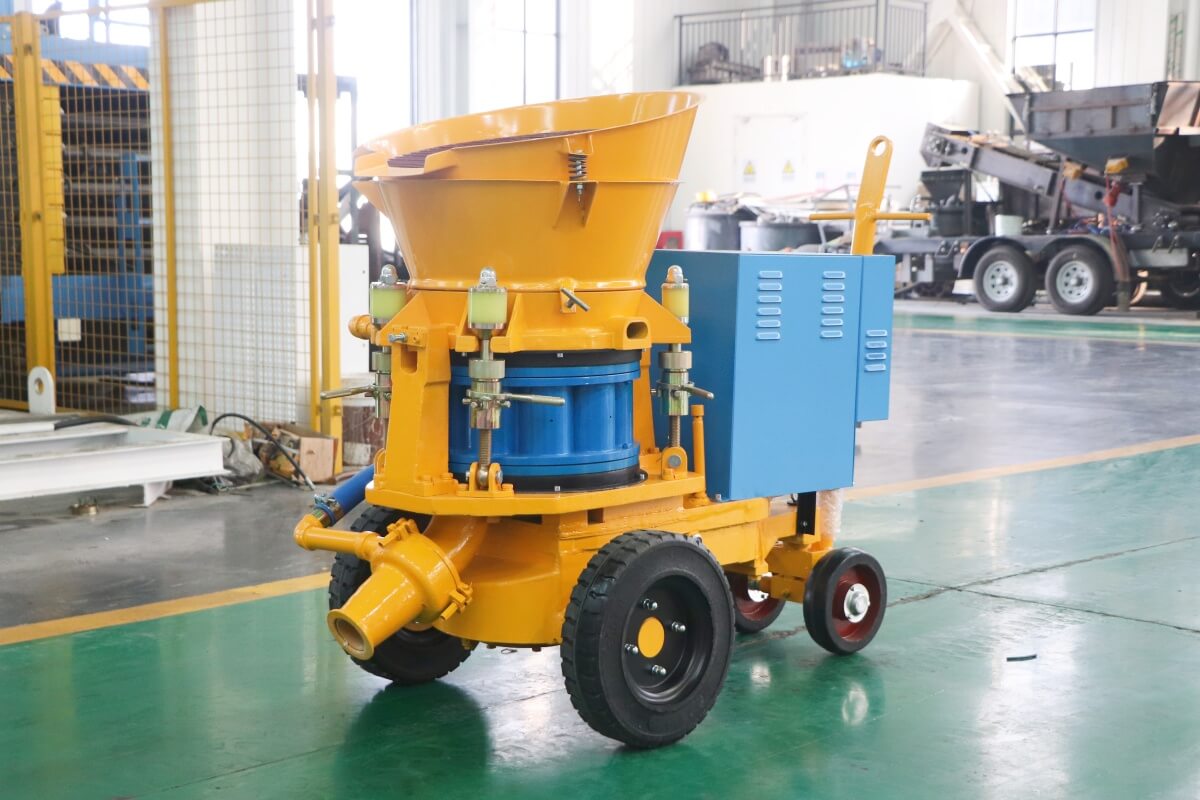
Dry-Mix vs Wet-Mix Small Concrete Spraying Machines
Small concrete shotcrete machines are mainly divided into two types: dry and wet. The core difference lies in the material mixing method and spraying process, adapting to different construction scenarios. When choosing a machine, it is necessary to consider project requirements, environmental requirements, and cost budget. A detailed comparison is as follows: I. Dry-Mix Small Shotcrete Machines Dry shotcrete machines adopt a “dry material conveying + nozzle water addition” operation mode. First, dry materials such as cement and sand are mixed according to a set ratio, then conveyed to the nozzle via high-pressure airflow, and finally mixed with high-pressure water before being sprayed onto the work surface. Its advantages lie in its smaller size, greater mobility, and price (approximately one-tenth that of wet shotcrete machines), resulting in lower initial investment costs and suitability for small-volume, temporary operations.
However, dry shotcrete machines have significant drawbacks: high dust concentration around the machine, which not only pollutes the environment but also harms the health of construction workers, failing to comply with current environmental protection regulations; poor sealing performance, prone to air leaks and pipe blockages, leading to lower spraying efficiency; and a high rebound rate, generally between 15% and 50%, resulting in significant material waste. Furthermore, uneven addition of powdered quick-setting agents can affect concrete mix proportions and construction quality. Currently, dry shotcrete machines are gradually being phased out by wet shotcrete machines.
II. Wet-Mix Small Shotcrete Machines
Wet shotcrete machines first thoroughly mix concrete, cement, and water in precise proportions to form a wet mixture, which is then conveyed to the nozzles via high-pressure power. No additional water is needed at the nozzles, resulting in extremely low dust emissions throughout the process, with the dust concentration around the machine controllable to below 10mg/m³. Its core advantages include a low rebound rate (below 15% under standard processes, and as low as 10% in high-quality models), strong concrete cohesion, high spray layer density, and a strength reaching C30-C35, meeting high-standard engineering requirements.
Furthermore, wet-type machines are easier to operate, require fewer operators, and are suitable for various complex working conditions, especially for construction in enclosed spaces such as mines and indoors. Its disadvantages include a higher initial equipment investment than dry-type machines, and the need for thorough cleaning after operation, making maintenance relatively more complicated. However, considering the overall cost of labor, materials, and equipment, it is roughly the same as dry-type machines, making it the mainstream choice for small and medium-sized projects.
Concrete Spraying Machine Main Applications
Small concrete spraying machines, with their flexibility and convenience, are widely used in three core areas: construction, mining, and maintenance and reinforcement. They cover various small and medium-sized engineering scenarios, precisely addressing construction pain points in different industries:
I. Construction Engineering Primarily used in civil buildings, small municipal engineering projects, and tunnel construction, such as spraying and plastering residential walls and roofs, initial support for small tunnels and culverts, and reinforcement and protection of foundation pit sidewalls and slopes. For example, in the lining construction of water diversion tunnels, the small wet spraying machine, with its compact structure and flexible mobility, can adapt to confined working spaces. Combined with an intelligent control system, it achieves uniform concrete spraying, ensuring the lining’s seepage prevention effect and service life.
II. Mining Engineering Suitable for support operations in mine shafts and mining areas, especially for the reinforcement of small mines and underground goaf areas. It can quickly spray concrete to form a support layer, sealing the surrounding rock, slowing weathering and erosion, and ensuring construction safety. Its lightweight design allows easy access to narrow underground areas without the need for large equipment towing, facilitating convenient relocation and effectively improving mine support efficiency.
III. Repair and Reinforcement Engineering Used for the repair and reinforcement of old buildings, roads, and bridges, such as wall crack repair, pavement damage repair, and bridge bearing reinforcement. Small shotcrete machines can be flexibly deployed in various indoor and outdoor scenarios without damaging the original structure. They can precisely spray repair materials, quickly restore the functionality of facilities, and reduce maintenance costs.
Advantages Over Traditional Shotcrete Equipment
Compared to traditional large shotcrete machines and manual spraying methods, small concrete shotcrete machines have significant advantages in adaptability, efficiency, and cost, making them the preferred equipment for small and medium-sized projects:
1. Greater adaptability and wider scenario coverage: Compact size and light weight allow access to narrow spaces inaccessible to traditional large shotcrete machines. No large hoisting equipment is required, making them suitable for multi-point, decentralized construction and accommodating various complex working conditions, including indoor and outdoor environments and underground locations.
2. Higher construction efficiency and lower labor costs: A single person can complete the entire operation, increasing spraying efficiency by over 50% compared to manual spraying. Some multi-nozzle models can spray up to 25m³ per hour, far exceeding traditional manual spraying, significantly reducing labor input.
3. Controllable costs and excellent cost-effectiveness: Equipment purchase costs, energy consumption, and subsequent maintenance costs are all lower than large shotcrete machines. Wear parts are highly interchangeable and easy to replace. Wet-type models have a low rebound rate, resulting in less material waste and significantly reducing overall construction costs in the long run.
4. Easy operation and low learning curve: Integrated button control requires no professional training; ordinary workers can quickly master the equipment, avoiding the dependence on professional operators found in traditional equipment and shortening the construction preparation cycle.
5. Environmentally friendly and compliant, safe and reliable: Wet-type models have low dust emissions, complying with environmental construction regulations and reducing harm to the health of construction workers. The equipment operates stably, with controllable pressure, producing uniform spray layer quality and reducing construction safety hazards.
How to Choose the Right Concrete Spraying Machine?
The key to selecting a small concrete spraying machine is matching it to project requirements, working conditions, and budget. Avoid blindly choosing a model that leads to idle equipment or insufficient construction efficiency. Specifically, consider these four dimensions:
1. Choose the type based on the construction scenario: For enclosed spaces (underground, indoors), prioritize wet-type machines, which are environmentally friendly and safe; for small-volume, temporary operations, and limited budgets, choose dry-type machines; for scenarios requiring high-quality support, such as tunnels and slopes, prioritize wet-type multi-nozzle machines.
2. Choose parameters based on spraying requirements: Select the spraying capacity (0.5-5 m³/h) based on the project’s spraying volume. For small-volume projects, 1-3 m³/h is sufficient; for large-volume projects, choose a 5 m³/h model; for outdoor scenarios without power, choose diesel or pneumatic drive; for indoor scenarios with power, choose electric drive.
3. Select Configuration Based on Quality Requirements: For high-quality sprayed layers (such as tunnel support), choose a wet-type machine with stable pressure and low rebound rate, which can be equipped with an intelligent control system to precisely adjust spraying parameters; for ordinary plastering and simple reinforcement, a basic configuration model is sufficient to control costs.
4. Choose a Brand Based on Post-Maintenance Considerations: Prioritize brands with good reputations and comprehensive after-sales service to ensure easy procurement of vulnerable parts (nozzles, delivery pipes) and avoid inconvenience in later maintenance; at the same time, pay attention to the equipment’s sealing performance and durability to reduce the failure rate.
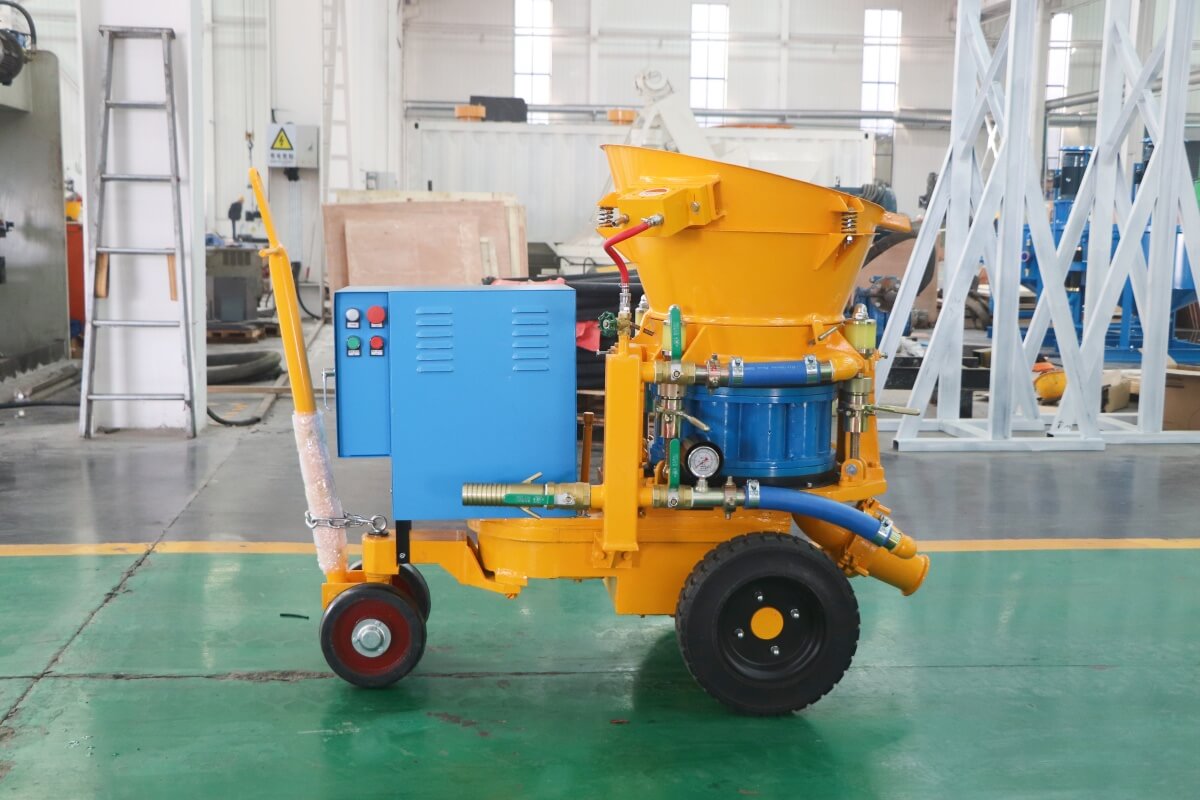
Maintenance Tips for Long-Term Performance
Proper maintenance is key to extending the service life of small concrete spraying machines and ensuring construction efficiency. The following five maintenance tasks should be performed daily:
1. Daily Cleaning to Prevent Pipe Clogging: After operation, promptly clean the hopper, delivery pipe, nozzles, and other components to remove residual concrete and prevent material from solidifying and clogging the pipes; during cleaning, repeatedly rinse with clean water to ensure no residue remains, and dry the components after cleaning to prevent rust.
2. Regular Inspection and Timely Replacement of Wear Parts: Check the wear condition of nozzles and conveying pipes weekly; replace them immediately if damage or aging is found. Regularly check seals to prevent air or material leaks. Check the operating status of the motor and diesel engine, and add lubricating oil as needed to ensure smooth operation.
3. Proper Storage and Protection: When the equipment is not in use, place it in a dry, well-ventilated environment, avoiding moisture and direct sunlight. Disassemble and properly store wear parts, and apply rust-preventive oil to metal parts to prevent oxidation. When moving equipment, always unplug the power cord to avoid electrical damage.
4. Standardized Operation and Reduced Losses: Strictly follow the equipment instruction manual for operation, avoiding overpressure and overload operation. When adjusting the injection pressure, the optimal range is 0.3-0.4 MPa. Excessive pressure can lead to material dripping and excessive paint mist, while insufficient pressure results in uneven spraying.
5. Regular Inspection and Troubleshooting: Conduct a comprehensive inspection of the equipment monthly, checking the electrical circuits, hydraulic system, and air lines for proper functioning, and checking for leaks, looseness, and other potential hazards; promptly change the gearbox oil and bearing lubricant to ensure long-term stable operation of the equipment.
FAQs About Small Size Concrete Spraying Machines
1. Q: Can the spraying distance of a small concrete spraying machine meet the needs of small and medium-sized projects?
A: Absolutely. Mainstream models have a horizontal conveying distance of 10-50m and a vertical conveying distance of 5-20m. The range can be extended by lengthening the conveying pipe, sufficient to cover the working radius of small and medium-sized construction, mining, and maintenance projects.
2. Q: Which is more suitable for environmentally friendly construction, dry or wet spraying machines?
A: Wet spraying machines are more environmentally friendly. Dry spraying machines have high dust concentrations, polluting the environment and harming health; wet spraying machines have a dust concentration ≤10mg/m³ near the machine, complying with environmental regulations, and are currently the mainstream choice.
3. Q: Do small spraying machines require professional operators?
A: No. The equipment features integrated button operation, making it simple to use. Ordinary workers can operate it after simple training, and a single person can complete the entire process, reducing labor costs.
4. Q: Are the easily worn parts difficult to replace? Are the maintenance costs high?
A: The easily worn parts (nozzles, delivery pipes) are highly versatile and easy to replace, requiring no special tools. Maintenance mainly involves cleaning, parts replacement, and adding lubricant, with costs far lower than large shotcrete machines, offering excellent value.
5. Q: What materials can the small shotcrete machine be used for spraying?
A: It has strong compatibility and can spray various materials such as concrete, mortar, and refractory materials. It can be used for shotcrete support, wall plastering, and refractory material repair, meeting the needs of multiple scenarios with a single machine.
Conclusion & Buying Advice
With its advantages of flexibility, high efficiency, energy saving, and cost-effectiveness, the small concrete shotcrete machine has become a core construction equipment for small and medium-sized construction, mining, and maintenance projects. It solves the pain points of poor adaptability and high labor costs of traditional shotcrete equipment while ensuring construction quality and environmental compliance.
Purchase Recommendations Summary: Prioritize wet-type machines to balance environmental protection and construction quality; select appropriate parameters and drive methods based on the spray volume and work scenario, avoiding blindly pursuing high configurations; prioritize reputable brands with comprehensive after-sales service, emphasizing equipment sealing performance and the versatility of wear parts to reduce later maintenance costs.
For small-volume, temporary operations, cost-effective dry-type machines are suitable; for tunnels, mines, and high-standard maintenance scenarios, wet-type multi-nozzle machines are recommended to improve construction efficiency and quality. Proper selection, standardized operation, and regular maintenance will maximize the value of small concrete spraying machines, reducing costs and increasing efficiency in construction projects.