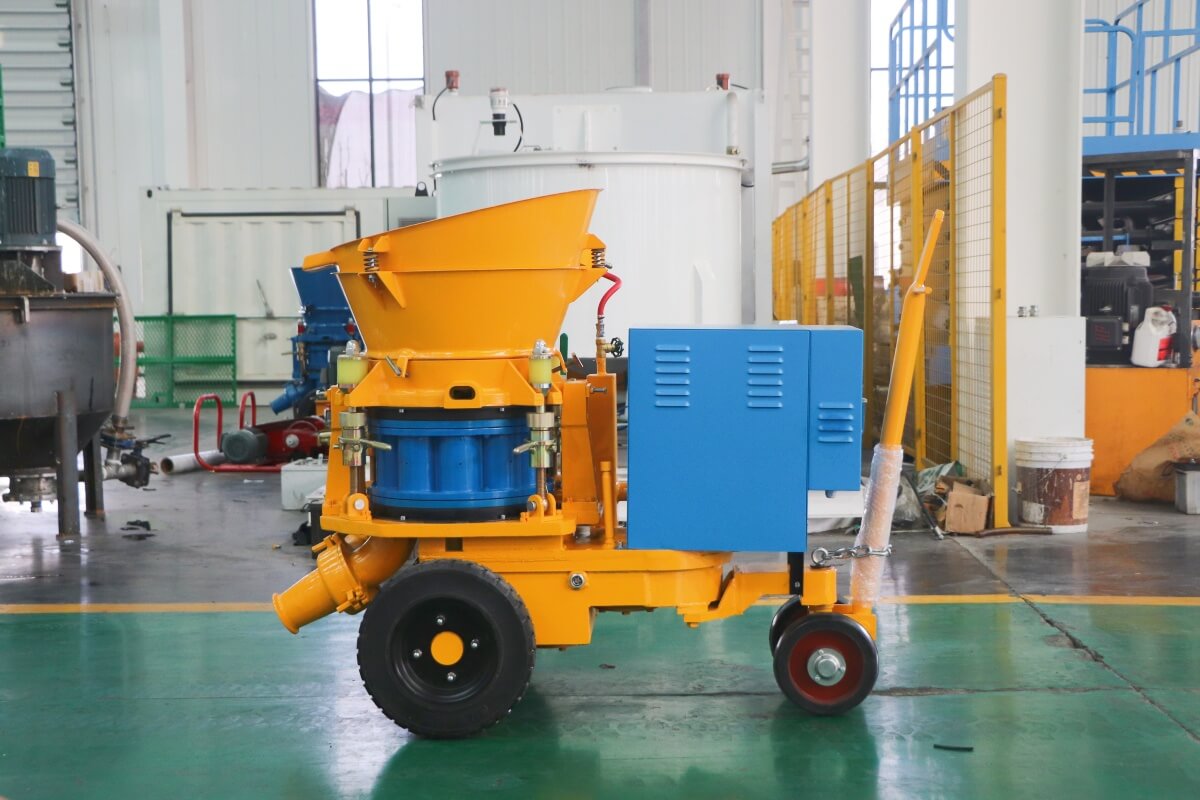
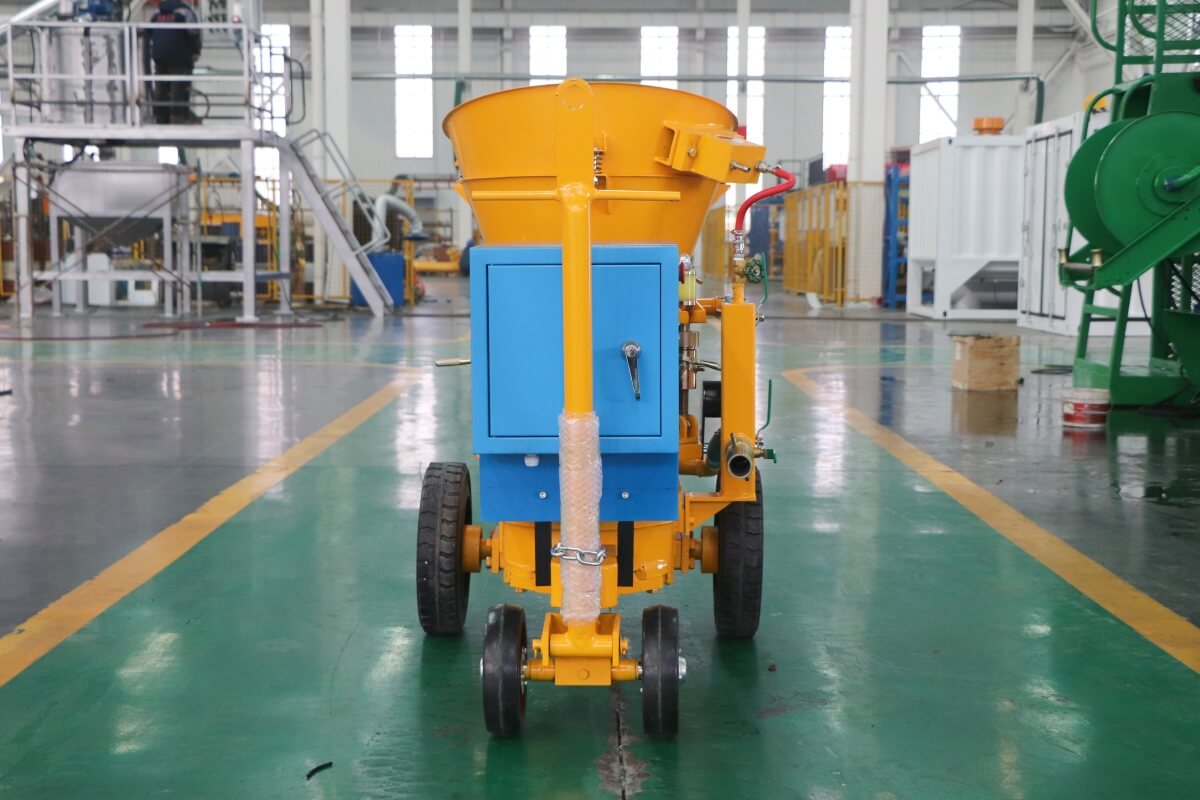
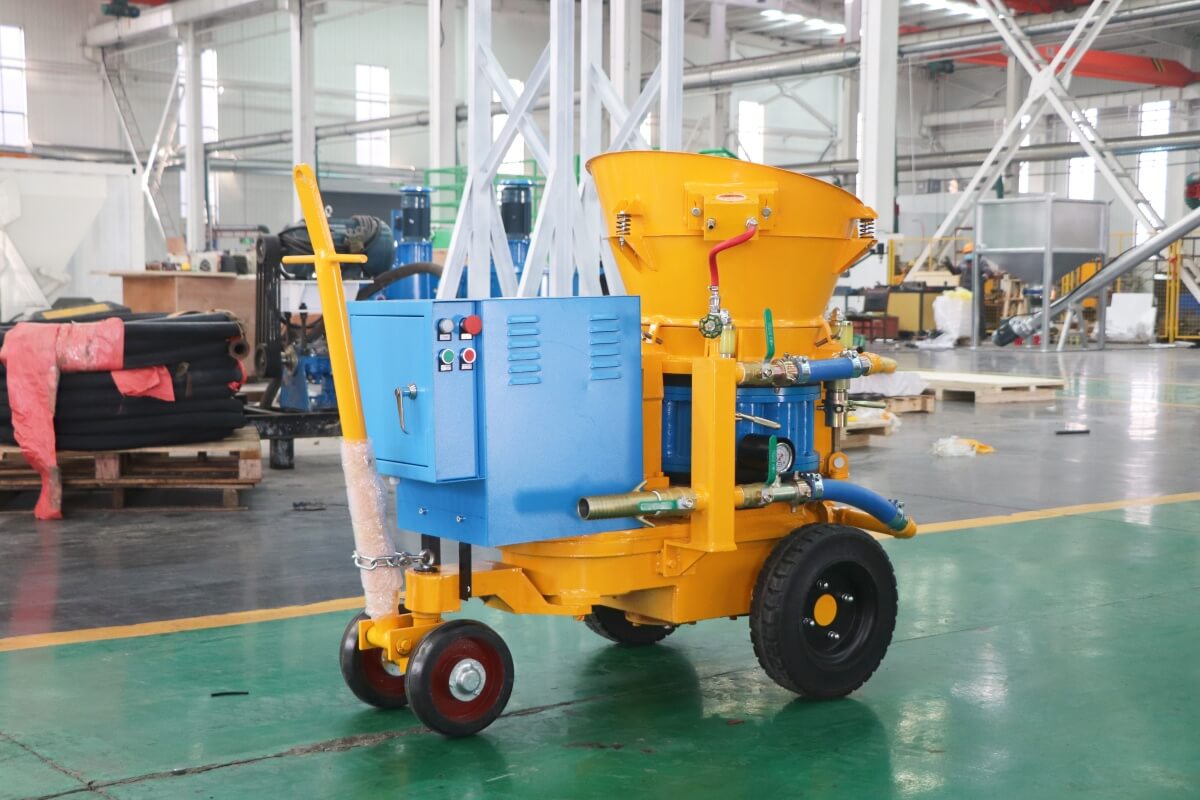
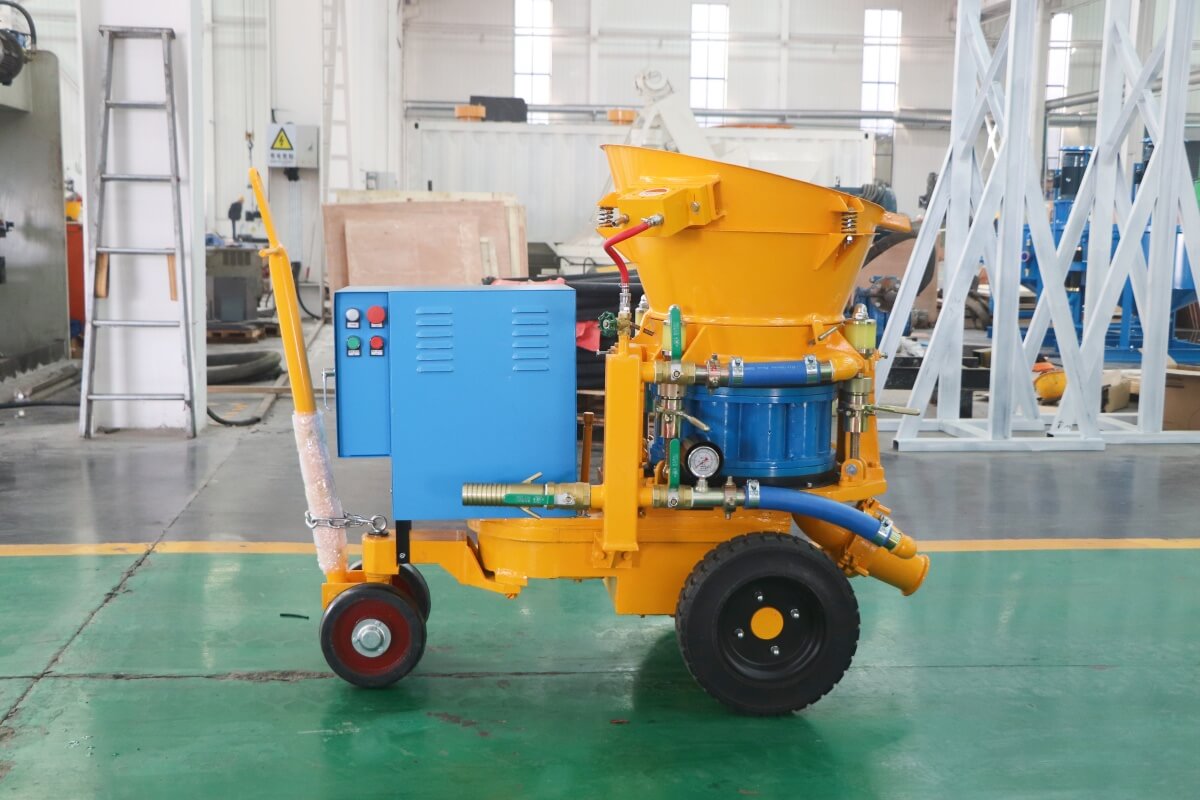
Shotcrete machine for slope protection
Shotcrete (spray grouting) technology has become the mainstream technology for slope stabilization protection due to its advantages of strong adaptability, stable protective effect, and high construction efficiency. Compared with traditional protection processes, shotcrete technology can adhere concrete to the slope surface through high-pressure spraying, forming a dense and high-strength support layer, effectively inhibiting the weathering and spalling of soil and rock, and enhancing the overall stability of the slope. It is especially suitable for protection operations on steep slopes and complex geological conditions, playing an irreplaceable role in controlling surrounding rock deformation, preventing collapse, and reinforcing structures.
I. Introduction: The Core Value of Slope Protection and the Significance of Shotcrete Technology
In infrastructure construction fields such as building, mining, and transportation, slope protection is a crucial link in ensuring project safety and mitigating geological disasters. Whether it’s steep slopes along highways and railways, open-pit mine slopes after mining, or slopes surrounding hydropower dams, the occurrence of landslides or collapses can not only lead to project delays and property losses but also threaten the lives of construction workers. With the continuous deepening of infrastructure construction and the constant improvement of mine safety standards in my country, the requirements for mechanization and standardization of slope protection are increasingly demanding. Traditional manual masonry and plastering methods are no longer sufficient to meet the needs of efficient and high-quality construction.
Shotcrete technology, with its advantages of strong adaptability, stable protective effect, and high construction efficiency, has become the mainstream technology for slope stabilization protection. Compared to traditional slope protection methods, shotcrete technology applies high-pressure concrete to the slope surface, forming a dense, high-strength support layer. This effectively inhibits weathering and spalling of the soil and rock, enhancing the overall stability of the slope. It is particularly suitable for slope protection operations on steep slopes and in complex geological conditions, playing an irreplaceable role in controlling surrounding rock deformation, preventing landslides, and reinforcing structures.
The shotcrete machine, as the core equipment in shotcrete operations, is the key to implementing shotcrete technology. Its performance directly affects construction efficiency, support quality, and operational safety. Current market requirements for shotcrete equipment have evolved from basic “usability” to a comprehensive upgrade towards “high efficiency, wear resistance, intelligence, and reliability.” This article will provide industry professionals with comprehensive and professional guidance on the definition, types, advantages, construction process, selection techniques, and maintenance points of shotcrete machines, helping engineering units efficiently complete slope protection operations and reduce construction risks and costs.
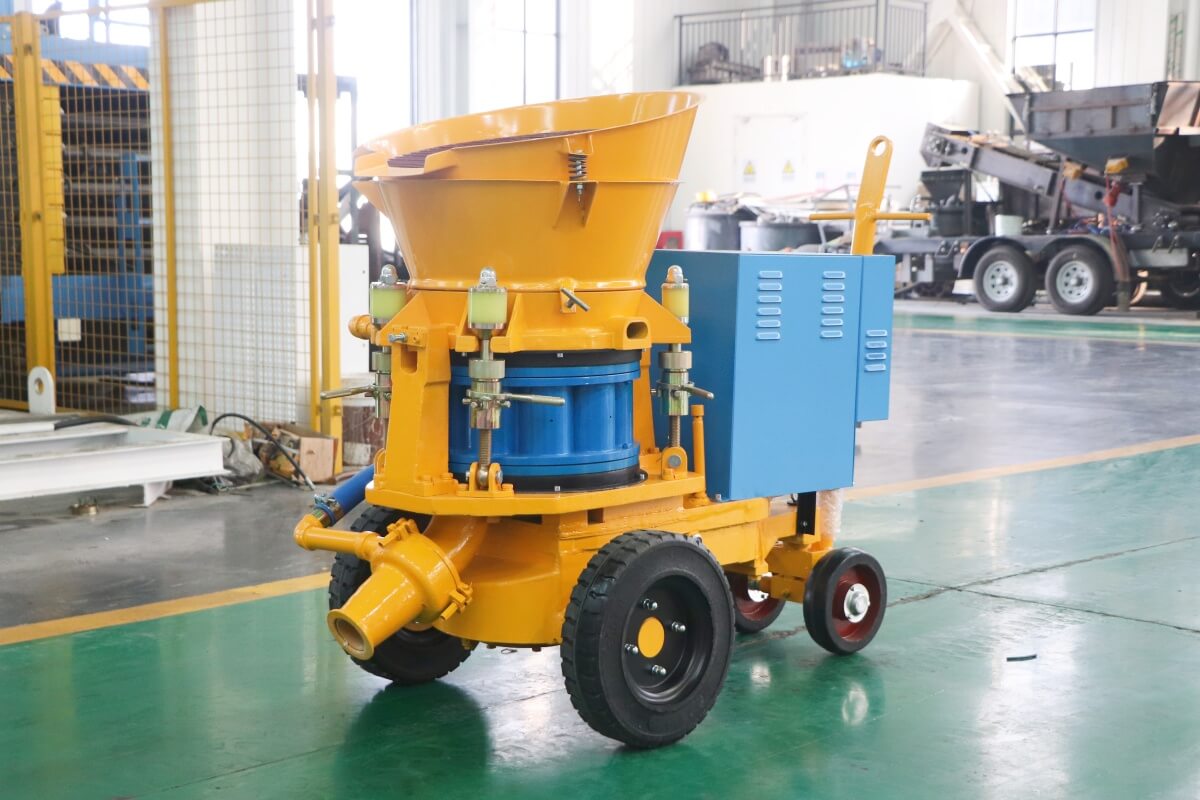
II. What is a Shotcrete Machine? Definition, Working Principle, and Core Components
2.1 Definition of a Shotcrete Machine
A shotcrete machine (also known as a sprayed concrete machine) is a specialized engineering machine that mixes concrete mixtures (cement, sand, gravel, water, and admixtures, etc.) in a specific ratio, then conveys the mixture to a nozzle via high-pressure airflow or mechanical pressure, and sprays it at high speed onto the surface to be sprayed (such as slopes or tunnel walls). After hardening, it forms a protective layer. Depending on the construction process, shotcrete machines can perform various operating modes, such as dry spraying and wet spraying, to meet the needs of different slope protection scenarios.
2.2 Working Principle of a Shotcrete Machine
The core working logic of a shotcrete machine is “material mixing → conveying → spraying → hardening,” and it is generally divided into two main working modes:
Dry Spraying Mode: Cement, sand, and other dry materials are mixed in a specific ratio and fed into the shotcrete machine hopper. The rotor rotates, sending the dry materials into the conveying pipe. Simultaneously, compressed air is injected from the end of the pipe, pushing the dry materials at high speed to the nozzle. At the nozzle, the dry materials mix with high-pressure water to form wet concrete, which is then sprayed at high speed onto the slope surface to complete the pouring of the protective layer. Wet spraying mode: Cement, sand, and water are pre-mixed into a wet concrete mixture according to the specified ratio, fed into the shotcrete machine hopper, and then conveyed under high pressure to the nozzle via a hydraulic or pneumatic system. Compressed air is used to enhance the spraying force, directly spraying the wet concrete onto the target surface without the need for additional water at the nozzle. This mode is more in line with environmentally friendly construction requirements and is currently the mainstream operating mode in the industry.
Essentially, the shotcrete machine uses pressure transmission to transform the concrete mixture into a high-speed jet stream. The impact force of the jetting force tightly bonds the mixture with the slope soil and rock, forming a protective layer with both strength and adhesion, achieving slope stability protection.
2.3 Core Components of the Shotcrete Machine The stable operation of the shotcrete machine depends on the coordinated work of its core components. The key components include the following four parts, and the performance of each component directly determines the construction efficiency and spraying quality of the equipment:
1. Hopper: Used to store and mix the concrete mixture (dry or wet). It is usually equipped with a vibration device to prevent the mixture from clumping or clogging, ensuring smooth feeding. 1. High-Quality Hopper: Made of wear-resistant material with a specially treated inner wall to reduce material adhesion and extend service life. For example, the hopper of the GZ series shotcrete machine features an anti-adhesion design, improving feeding efficiency.
2. Rotor: The core power transmission component of the shotcrete machine. Driven by a motor or hydraulic system, it quantitatively feeds the mixture from the hopper into the conveying pipeline. The rotor’s sealing and wear resistance are crucial. High-quality rotors use wear-resistant alloy materials and feature an elastic compensation clamping structure, resulting in excellent sealing, less dust accumulation around the machine, and a longer lifespan for vulnerable parts.
3. Air System: Composed of an air compressor, air pipes, and pressure regulating valves, its core function is to provide high-pressure air to propel the mixture through the conveying pipeline and enhance the spray force at the nozzles. The pressure stability of the air system directly affects the spraying effect; insufficient pressure leads to poor mixture conveying and increased rebound rate, while excessive pressure results in material waste.
4. Nozzle: The spray outlet for the mixture, responsible for evenly spraying the mixture onto the receiving surface. Its structural design directly affects the spray range, uniformity, and rebound rate. Nozzles are typically equipped with wear-resistant bushings and can adjust the spray angle (0-90°) according to construction needs. Some high-end nozzles can also achieve precise mixing of the mixture and accelerator, improving the setting speed.
III. Why Choose a Shotcrete Machine for Slope Protection? 4 Core Advantages
Compared to traditional slope protection processes (such as mortar-grouted rubble masonry and wire mesh spraying), shotcrete machine construction has irreplaceable advantages, especially suitable for demanding construction scenarios such as steep slopes and complex geological conditions. It is the preferred solution for engineering units to improve construction efficiency and reduce costs.
3.1 High Adhesion, Suitable for Steep Slopes
Shotcrete machines use high-pressure spraying to cause the concrete mixture to impact the surface of the slope’s soil and rock mass at high speed. The mixture can penetrate into the crevices of the soil and rock mass, forming an “integrated” structure after setting, resulting in extremely strong adhesion. Even on steep slopes with a gradient greater than 60°, it can effectively prevent the protective layer from peeling off and becoming hollow, completely solving the pain point of insufficient adhesion in traditional processes on steep slopes. Meanwhile, the concrete mixture produced by wet spraying is mixed with a precise water-cement ratio, resulting in higher cohesiveness and less susceptibility to deformation due to crustal changes, further enhancing the stability of slope protection.
3.2 Faster Construction Speed, Shorter Construction Period
Shotcrete machines enable mechanized concrete spraying, eliminating the need for manual plastering and masonry. A single machine can spray 3-50 m³ per hour (depending on the model), which is 5-10 times more efficient than manual construction. Taking Qingke Heavy Industry’s wet spraying trolley as an example, its spraying capacity can reach 30-50 cubic meters per hour, more than 3 times that of traditional small wet spraying equipment, enabling rapid completion of large-area slope protection work and significantly shortening the construction period. Especially for large-scale slope protection projects, multiple shotcrete machines can operate in tandem, further improving construction efficiency and facilitating early project completion.
3.3 Reduced Material Waste and Lower Rebound Rate
In traditional manual construction, the concrete waste rate is as high as 20%-30%, while shotcrete machines, through precise control of the mixture ratio, spraying pressure, and angle, can effectively reduce the rebound rate. Dry shotcrete machines typically control the rebound rate between 15% and 50%, while wet shotcrete machines can achieve a rebound rate as low as below 10%. The new generation of long-range wet shotcrete machines can even control the average rebound rate below 15%, far superior to dry shotcrete processes. Furthermore, the closed-loop conveying system of shotcrete machines reduces the spillage of the mixture during transport, further minimizing material waste and saving construction costs.
3.4 High Cost-Effectiveness and Strong Durability Shotcrete machine construction eliminates the need for complex scaffolding, reducing material and labor costs associated with scaffolding construction. Simultaneously, the resulting concrete protective layer boasts high strength (up to C20-C30), strong resistance to weathering and erosion, and a service life of 15-20 years, requiring minimal maintenance and renovation. Moreover, shotcrete machines are reusable and adaptable to various slope protection projects, offering even higher cost-effectiveness in the long run. This is especially beneficial for small and medium-sized construction companies, where the high cost-effectiveness of shotcrete equipment effectively controls overall construction costs.
IV. Main Types of Shotcrete Machines: Classification by Process and Power Source
Based on different construction processes and power sources, shotcrete machines can be divided into various types. Different types of equipment are suitable for different construction scenarios and needs. Engineering units need to select according to the actual situation of the project to avoid improper selection affecting construction efficiency.
4.1 Classification by Construction Process: Dry Shotcrete Machines and Wet Shotcrete Machines
4.1.1 Dry Shotcrete Machines
Dry shotcrete machines are traditional shotcrete equipment. Their core feature is the use of dry material conveying and water mixing through nozzles. They have a simple structure, small size, and light weight, making them easy to transport and suitable for small slope protection projects (such as small mine slopes and partial reinforcement of highway slopes). Dry shotcrete machines can convey materials over 200 meters and can perform shotcrete operations with an air pressure of 7 cubic meters. The equipment cost is relatively low, but the dust concentration during construction is high, which has a certain impact on the construction environment and the health of operators. The rebound rate is relatively high. Common models include the GZ series dry shotcrete machines, including GZ-3, GZ-5, and GZ-9, which can meet different spraying capacity requirements. 4.1.2 Wet Shotcrete Machine Wet shotcrete machines are currently the mainstream shotcrete equipment. They employ a wet-mixing and high-pressure conveying method. The mixture is pre-mixed according to the specified ratio, eliminating the need for water addition at the nozzle. This results in extremely low dust concentration, meeting environmental protection requirements. The sprayed concrete is uniform in texture, high in strength, and has a low rebound rate, making it suitable for large-scale slope protection projects (such as highway slopes, mine slopes, and hydropower dam slopes). Wet shotcrete machines require an air pressure of 13 cubic meters to operate. Vertical conveying distances can reach 20-30 meters, and horizontal conveying distances are 30-50 meters. While the equipment structure is relatively complex and the cost is higher than dry shotcrete machines, it is more energy-efficient and environmentally friendly in the long run.
4.2 Classification by Power Source: Electric and Diesel/Hydraulic Types
4.2.1 Electric Shotcrete Machines
Electric shotcrete machines use an electric motor as their power source. They operate stably, with low noise and low energy consumption, making them suitable for construction scenarios with a stable power supply (such as highway slopes near towns and slopes around factories). They are easy to operate and have low maintenance costs, making them a common choice for small and medium-sized slope protection projects. For example, Our GZ series dry shotcrete machines mostly use electric drives, and the voltage levels can be adapted to various specifications such as 380V, 440V, and 660V to meet the power requirements of different construction scenarios.
4.2.2 Diesel/Hydraulic Shotcrete Machines
Diesel/hydraulic shotcrete machines use a diesel engine as their power source, combined with a hydraulic system. They are powerful and do not rely on an external power source, making them suitable for construction scenarios in remote areas without a power supply (such as slopes in mountain mines and highway slopes in mountainous areas). It adapts to complex terrain, has strong climbing ability, and can achieve long-distance transport, making it particularly suitable for large-scale, high-intensity slope protection operations. Examples include the wet shotcrete trolley from Qingke Heavy Industry and the large shotcrete equipment from Foundation. These often use diesel/hydraulic drives to meet the construction needs under complex conditions. However, diesel/hydraulic shotcrete machines are noisier, consume more energy, and have higher maintenance costs than electric models.
V. Key Selection Criteria: 5 Core Performance Indicators of Shotcrete Machines Choosing the right shotcrete machine hinges on matching the project’s construction requirements. The following five performance indicators should be carefully considered to avoid blindly pursuing “high configuration” or “low price,” ensuring equipment adaptability and cost-effectiveness.
5.1 Output Capacity (m³/h) Output capacity is the core performance indicator of a shotcrete machine, representing the amount of shotcrete produced per hour, directly determining construction efficiency. Engineering units should select equipment based on the slope protection area and construction period requirements: For small projects (protection area < 1000㎡), equipment with an output capacity of 3-8 m³/h can be selected; for medium-sized projects (protection area 1000-5000㎡), equipment with an output capacity of 8-20 m³/h can be selected; for large projects (protection area > 5000㎡), equipment with an output capacity of 20 m³/h or more is required. For example, the output capacity of Qingke Heavy Industry’s wet spraying trolley can reach 30-50 m³/h, which can meet the high-efficiency construction needs of large projects.
5.2 Spraying Distance Spraying distance is divided into horizontal and vertical distances, which need to be selected according to the slope height and gradient. For steep slopes (height > 10m), equipment with a vertical spraying distance ≥ 15m should be selected; for long-distance slopes (such as mining slopes), equipment with a horizontal spraying distance ≥ 50m should be selected. The new generation of long-range wet spraying machines can achieve stable spraying at a horizontal distance of 1000 meters and a vertical distance of 200 meters, adapting to the needs of long-distance and high-height slope protection. Meanwhile, the stability of the spraying distance is also crucial to avoid insufficient spraying force and material scattering.
5.3 Low Rebound Rate Rebound rate directly affects material waste and construction costs, making it a key selection indicator. Prioritize equipment with low rebound rates; wet shotcrete machines are superior to dry shotcrete machines. High-quality wet shotcrete machines can control the rebound rate below 10%, while dry shotcrete machines should have a rebound rate ≤20%. Furthermore, the nozzle design and air pressure regulation function of the equipment also affect the rebound rate. For example, shotcrete machines equipped with optimized nozzles can effectively reduce the rebound rate and improve spraying quality.
5.4 Quality of Wear-Resistant Components The hopper, rotor, nozzles, and conveying pipes of shotcrete machines are in constant contact with concrete mixtures and are prone to wear. Therefore, components made of wear-resistant materials must be selected. High-quality shotcrete machines use alloy materials or special wear-resistant coatings for their wear-resistant components. For example, the steel lining plates of shotcrete machines undergo carburizing treatment, and the rubber parts use high-quality natural rubber, with wear resistance more than twice that of ordinary machines. This extends component lifespan, reduces replacement frequency, and lowers maintenance costs. Some manufacturers, such as Henan Gengli, have adopted special alloy materials and surface treatment processes for easily worn parts of shotcrete machines, further extending the service life of key components.
5.5 Ease of Operation and Maintenance Slope protection construction environments are complex, and the ease of operation and maintenance of equipment directly affects construction efficiency. Priority should be given to equipment with a simple operating interface and a high degree of automation, such as shotcrete machines equipped with industrial-grade dedicated computer control systems. These offer strong anti-interference capabilities, outstanding stability under harsh working conditions, and simplified operating procedures, reducing reliance on skilled operators. Furthermore, easily worn parts of the equipment should be easy to disassemble and replace, with an ample supply of after-sales spare parts to minimize equipment downtime.
VI. Main Application Scenarios of Shotcrete Machines in Slope Protection
Shotcrete machines, with their strong adaptability and excellent protective effect, are widely used in various slope protection projects, covering multiple fields such as transportation, mining, and hydropower. The following are four core application scenarios:
6.1 Highway and Railway Slope Protection
High and steep slopes along highways and railways (such as mountain highway slopes and railway subgrade slopes) are key areas for protection, as they are easily affected by rainwater erosion and soil weathering, leading to landslides and collapses. Shotcrete machines form a protective layer by spraying concrete, effectively inhibiting soil and rock spalling, enhancing slope stability, and adapting to the protection needs of different slopes and geological conditions (such as rock slopes and soil slopes). In a mountainous highway slope protection project, after introducing the Qingke wet shotcrete trolley, the equipment demonstrated excellent climbing ability and coverage radius, perfectly adapting to complex terrain. The project was ultimately completed 12 days ahead of schedule, with a 100% pass rate for the shotcrete.
6.2 Slope Protection in Mines and Quarries After mining and quarrying operations, large areas of open slopes are formed. The loose rock and soil structure makes these slopes prone to collapse, threatening operational safety. Shotcrete machines can provide all-around protection for mine slopes, making them particularly suitable for complex scenarios such as underground mines and quarry slopes. Explosion-proof shotcrete machines for mining are equipped with explosion-proof motors, effectively preventing coal mine accidents and meeting the protection needs of special environments like coal mines. Shotcrete machines can also be used in conjunction with anchor bolts and wire mesh to enhance protection strength and ensure mine operation safety.
6.3 Slope Protection for Hydropower and Dam Projects Slopes around hydropower projects and dams are constantly affected by water erosion and water level changes, making them prone to soil erosion and landslides. The concrete protective layer sprayed by shotcrete machines has strong erosion and impermeability resistance, effectively protecting the slope’s rock and soil, preventing water erosion, and ensuring the safe operation of dams and hydropower stations. Wet shotcrete machines are widely used in these types of projects. The sprayed concrete has good homogeneity and high strength, meeting the stringent protection requirements of hydropower projects.
6.4 Tunnel Entrance and Mountain Reinforcement
Slope and mountain reinforcement projects at tunnel entrances require the rapid formation of a protective layer to suppress soil and rock collapse and provide safety assurance for tunnel construction. Shotcrete machines can quickly complete the shotcrete protection of tunnel entrance slopes. Used in conjunction with anchor bolts and steel arches, they form a composite protection system of “anchor bolts + shotcrete,” enhancing mountain stability. Hunan Wuxin Tunnel Intelligent Equipment’s shotcrete equipment can be integrated with robotic arms and positioning systems to achieve remote control and automatic positioning, adapting to the intelligent construction needs of complex construction scenarios such as tunnel entrances.
VII. Slope Shotcrete Construction Process: 4 Key Steps
Shotcrete machine slope protection construction must follow a standardized process. Each step directly affects the protection effect. The core process consists of 4 key steps, which must be strictly followed according to specifications to avoid construction hazards.
7.1 Surface Pretreatment
Surface pretreatment is the foundation of shotcrete construction. Its purpose is to remove loose soil, gravel, weeds, and other debris from the slope surface, ensuring a tight bond between the concrete and the slope’s soil and rock mass. Specific procedures include: first, manually or mechanically cleaning the slope surface to remove loose soil and rock; for uneven slopes, leveling is required, and slopes that do not meet requirements must be adjusted to the design slope; finally, the slope surface is washed with high-pressure water to remove dust and mud, enhancing the adhesion of the concrete. If the moisture content of the slope’s soil and rock mass is too high, it needs to be dried beforehand to prevent hollow areas and cracking of the concrete after spraying.
7.2 Anchor Bolt and Wire Mesh Installation
For steep slopes and slopes with loose soil and rock mass, anchor bolts and wire mesh must be installed first to enhance the stability of the protective layer. Anchor bolts are made of threaded steel or steel pipe, drilled and inserted at designed intervals (usually 1-1.5m), and fixed with cement mortar to ensure they penetrate deep into the soil and rock (depth ≥1.5m). Galvanized wire mesh or steel mesh is laid on the slope surface and fixedly connected to the anchor bolts. The overlap width of the wire mesh is ≥10cm to ensure no looseness or gaps, providing support for shotcreting and preventing concrete slack.
7.3 Shotcreting Construction
Shotcreting is the core process, requiring strict control of the mix ratio, spraying pressure, and spraying angle to ensure spraying quality. Specific Operation Procedures:
1. Mixing Ratio: For dry shotcrete machines, the mixing ratio is (cement:sand = 1:3-1:4, water-cement ratio = 0.4-0.5); for wet shotcrete machines, the mixing ratio is (cement:sand = 1:2.5-1:3.5, water-cement ratio = 0.5-0.6). A quick-setting agent can be added (2%-5% of the cement weight) to accelerate concrete setting, depending on the slope geological conditions.
2. Equipment Debugging: Start the shotcrete machine and adjust the air pressure (0.4-0.6 MPa for dry shotcrete machines, 0.6-0.8 MPa for wet shotcrete machines) and conveying speed to ensure stable equipment operation without leaks or blockages.
3. Spraying Operation: The operator holds the nozzle perpendicular to the slope surface, maintaining a spraying distance of 1-1.5m. The spraying sequence is from bottom to top and from left to right, spraying evenly. The spray thickness is as designed (usually 8-15cm), applied in 2-3 coats, with each coat not exceeding 5cm in thickness to avoid excessive thickness leading to concrete sloughing.
7.4 Curing and Finishing: After spraying, timely curing is necessary to ensure concrete strength development. The curing period should be no less than 7 days. In hot weather, water should be sprayed to maintain moisture and prevent concrete cracking; in cold weather, insulation measures should be taken to prevent the concrete from freezing. After curing, inspect the protective layer surface. If problems such as hollowness, cracking, or detachment are found, repair them promptly. Simultaneously, clean the construction site, collect any remaining materials, and clean and maintain the equipment.
VIII. How to Choose a Suitable Shotcrete Machine? Four Key Decision-Making Factors
Choosing a shotcrete machine requires consideration of the project’s specific circumstances, including project size, construction environment, and budget. Inappropriate selection can lead to low construction efficiency and increased costs. The following are four key decision-making factors:
8.1 Project Size and Slope Angle
Small projects (e.g., small slope reinforcement area, gentle slope) can choose a small electric dry shotcrete machine, which is cost-effective and easy to transport. Medium-sized projects can choose a medium-sized wet shotcrete machine, balancing efficiency and environmental friendliness. Large projects (e.g., large areas of steep slopes) require a large diesel/hydraulic wet shotcrete machine, which has a large output capacity and long spraying distance, and can be used with a shotcrete trolley to improve construction efficiency. For steep slopes with an angle >60°, a wet shotcrete machine is preferred due to its stronger adhesion and lower rebound rate, making it suitable for the construction needs of steep slopes.
8.2 Working Environment For projects with a stable power supply and a favorable construction environment (such as around towns), electric shotcrete machines are preferred due to their low noise and environmental friendliness. For projects in remote areas, without power supply, or with complex terrain (such as mountains or mines), diesel/hydraulic shotcrete machines are preferred due to their powerful performance and adaptability. Meanwhile, if the construction environment has high environmental requirements (such as around scenic areas or residential areas), wet shotcrete machines should be selected due to their low dust concentration, meeting environmental standards. For special environments such as underground mines, explosion-proof shotcrete machines are required to ensure operational safety.
8.3 Budget and Operating Costs For small and medium-sized projects with limited budgets, small dry shotcrete machines with high cost-effectiveness can be selected due to their low equipment purchase cost, but the subsequent material waste and maintenance costs must be considered. For projects with sufficient budgets and a focus on long-term benefits, wet shotcrete machines are preferred. Although the purchase cost is higher, the low rebound rate and less material waste result in lower long-term operating costs. Meanwhile, energy consumption and replacement costs of easily worn parts must be considered. Equipment with low energy consumption and cost-effective replacement of easily worn parts should be selected, such as equipment from manufacturers like Gaode Equipment, which have ample supplies of easily worn parts and lower replacement costs.
8.4 After-sales Service and Spare Parts Supply Shotcrete machines are prone to malfunctions during construction. High-quality after-sales service and an ample supply of spare parts can reduce equipment downtime and ensure construction progress. When selecting shotcrete machines, prioritize manufacturers with a good reputation and comprehensive after-sales service. These manufacturers have established extensive offices and after-sales service centers nationwide, providing timely installation, commissioning, and troubleshooting services. At the same time, ensure that the manufacturer can provide sufficient easily worn parts (such as nozzles, wear-resistant liners, and seals) to avoid construction stoppages due to parts shortages.
IX. Daily Maintenance and Troubleshooting of Shotcrete Machines Stable operation of shotcrete machines relies on daily maintenance. Proper maintenance extends equipment lifespan and reduces the failure rate. Simultaneously, mastering common troubleshooting techniques allows for quick resolution of equipment problems during construction, preventing project delays.
9.1 Daily Inspections (Pre-shift + During-shift + Post-shift) The core of daily maintenance lies in “prevention” and “periodicity.” Regular inspections, cleaning, tightening, and lubrication eliminate potential problems in their early stages.
1. Pre-shift Inspection: A “health check” before starting the machine. Observe the equipment around its perimeter for any obvious external damage or leaks; check the power system (motor wiring secure, cables undamaged; for diesel engines, check fuel and oil levels and cooling system); check the hopper’s inner wall for material accumulation, the wear of the mixing blades, and the tightness of bolts; check the sealing of the conveying pipeline and nozzle connections for blockages or damage; check the hydraulic or pneumatic system’s oil level and air pressure for normal operation.
2. In-shift inspection: During equipment operation, closely monitor sound, vibration, temperature, and pressure. Listen for abnormal noises from the motor and pump, and check key parts for excessively high temperatures. Observe whether the pressure gauge reading is stable, whether material conveying is smooth, and whether there are any signs of pipe blockage.
3. Post-shift maintenance: Thoroughly clean the hopper, mixing drum, conveying pipeline, and nozzles of any residual material to prevent solidification and hardening. Add or replace lubricating oil/grease at all lubrication points and tighten all connecting bolts. Store the equipment in a dry and ventilated place. If the equipment is not used for a long period, take protective measures such as dust prevention and draining the coolant.
9.2 Cleaning process: Cleaning is key to maintenance. After each construction operation, clean all parts of the equipment promptly: Rinse the hopper, rotor, and conveying pipeline with high-pressure water to remove residual concrete mixture; clean blockages in the nozzles and check nozzle wear; clean the air system filters to remove dust and debris and ensure smooth airflow; clean dust and dirt from the equipment surface to prevent dust from entering the equipment and affecting component operation. During cleaning, care must be taken to avoid water damage to electrical components, which must be properly waterproofed.
9.3 Common Fault Troubleshooting (Blocking, Rebound, Start-up Faults)
Troubleshooting should follow the principles of “from the surface to the core, from the easy to the difficult, and troubleshooting in stages,” combining experience and logical reasoning to quickly find the root cause of the problem.
1. Blocking Fault: The most common fault, manifested as interruption of feeding or a sudden increase in pressure. Immediately stop the machine; do not force it to start and clear the blockage. Start from the nozzle and check the pipeline section by section towards the hopper. Once the blockage is found, remove it by tapping, blowing with high-pressure air, or disassembling and cleaning. The causes of blockage are often improper mixture ratio, material agglomeration, or excessive conveying speed. Adjust the ratio, remove agglomerated material, and adjust the conveying speed promptly.
2. Excessive Rebound Rate: The main causes are insufficient spray pressure, excessive distance between the nozzle and the slope, and improper mixture ratio. During troubleshooting, adjust the air pressure (0.4-0.6 MPa for dry shotcrete machines, 0.6-0.8 MPa for wet shotcrete machines), adjust the nozzle distance to 1-1.5 m, optimize the mixture ratio, add an appropriate amount of accelerator, and reduce rebound.
3. Starting Failure: For electric shotcrete machines, check the power supply, switch, and fuses. Abnormal noise from the motor without rotation may indicate overload, phase loss, or internal motor fault. For diesel-powered shotcrete machines, check the starting system, fuel supply, and ignition system; replenish fuel promptly and repair ignition components.
9.4 Replacement of Vulnerable Parts: Nozzles, wear-resistant liners, seals, and mixing blades are vulnerable parts of the shotcrete machine and require regular inspection and timely replacement. Replace nozzles immediately when severely worn (uneven spraying, increased rebound rate); replace wear-resistant liners when worn more than 3 mm; replace seals promptly when aged or leaking; replace mixing blades when severely worn (uneven mixing). When replacing easily damaged parts, original factory parts must be selected to ensure compatibility with the equipment. After replacement, adjustments should be made to ensure stable equipment operation.
X. Conclusion and Procurement Guide: Choosing the Right Shotcrete Machine for Efficient Slope Protection
10.1 Summary of the Core Value of Shotcrete Machines in Slope Protection
As the core equipment for slope protection, shotcrete machines have become the preferred equipment for various slope protection projects due to their advantages of high adhesion, high construction efficiency, low material waste, and high cost-effectiveness. They not only effectively improve slope stability and avoid geological disaster risks such as landslides and collapses, but also shorten the construction period, reduce construction costs, and balance environmental protection and safety, adapting to the slope protection needs of various fields such as highways, railways, mines, and hydropower. With technological upgrades, shotcrete machines are developing towards intelligence, high efficiency, and environmental protection, providing more reliable technical support for slope protection projects.
10.2 The Importance of Choosing a Reliable Manufacturer
The quality and performance of the shotcrete machine directly determine the construction effect and safety; choosing a reliable manufacturer is crucial. Reputable manufacturers possess comprehensive R&D, production, and after-sales service systems, providing equipment that meets industry standards and customized solutions based on project needs. We recommend manufacturers specializing in shotcrete machine R&D and manufacturing, such as Gaode Equipment and Lead Equipment. These manufacturers have extensive industry experience, mature production technology, reliable product quality, and comprehensive after-sales service, providing all-round support for engineering construction.
10.3 Procurement Consultation and Action Appeal
If you are preparing for a slope protection project and need to select or purchase shotcrete machines, or require technical consultation or construction plan optimization, please feel free to contact us! We have a professional technical team that can recommend suitable shotcrete machine models based on your project scale, construction environment, and budget requirements, providing one-on-one technical guidance, comprehensive after-sales service, and spare parts supply to ensure smooth construction. Email: info@gaodetec.com