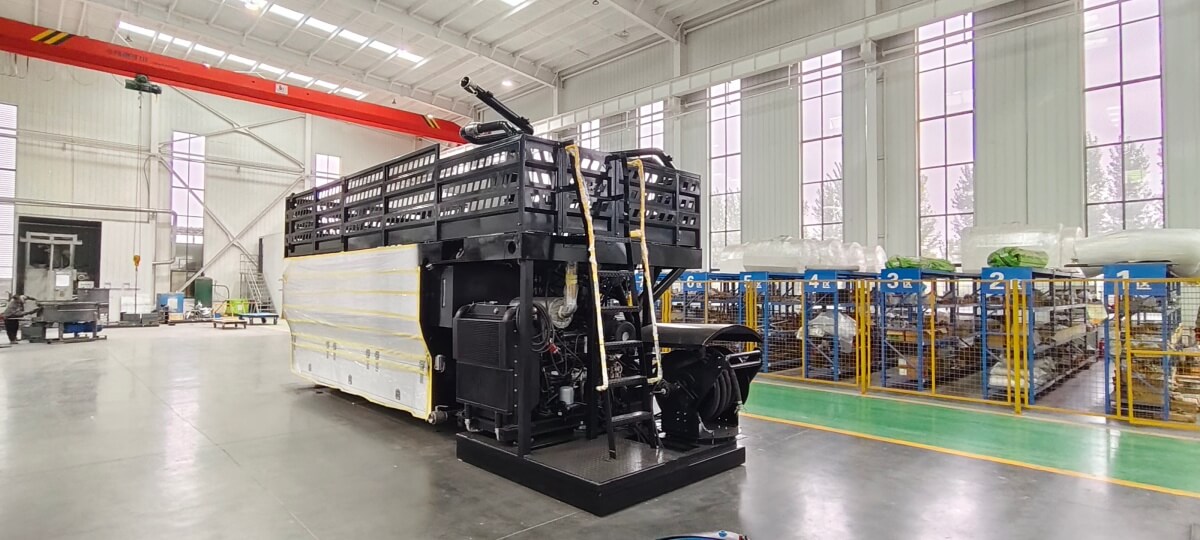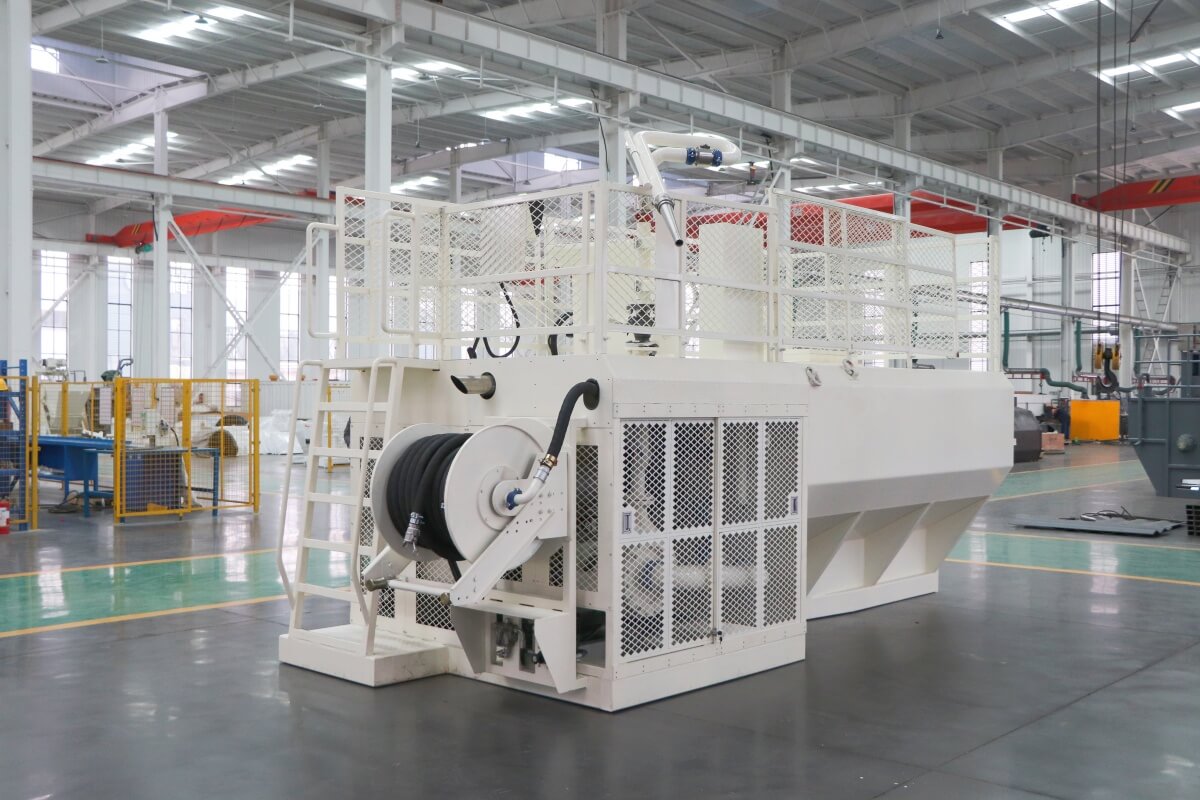
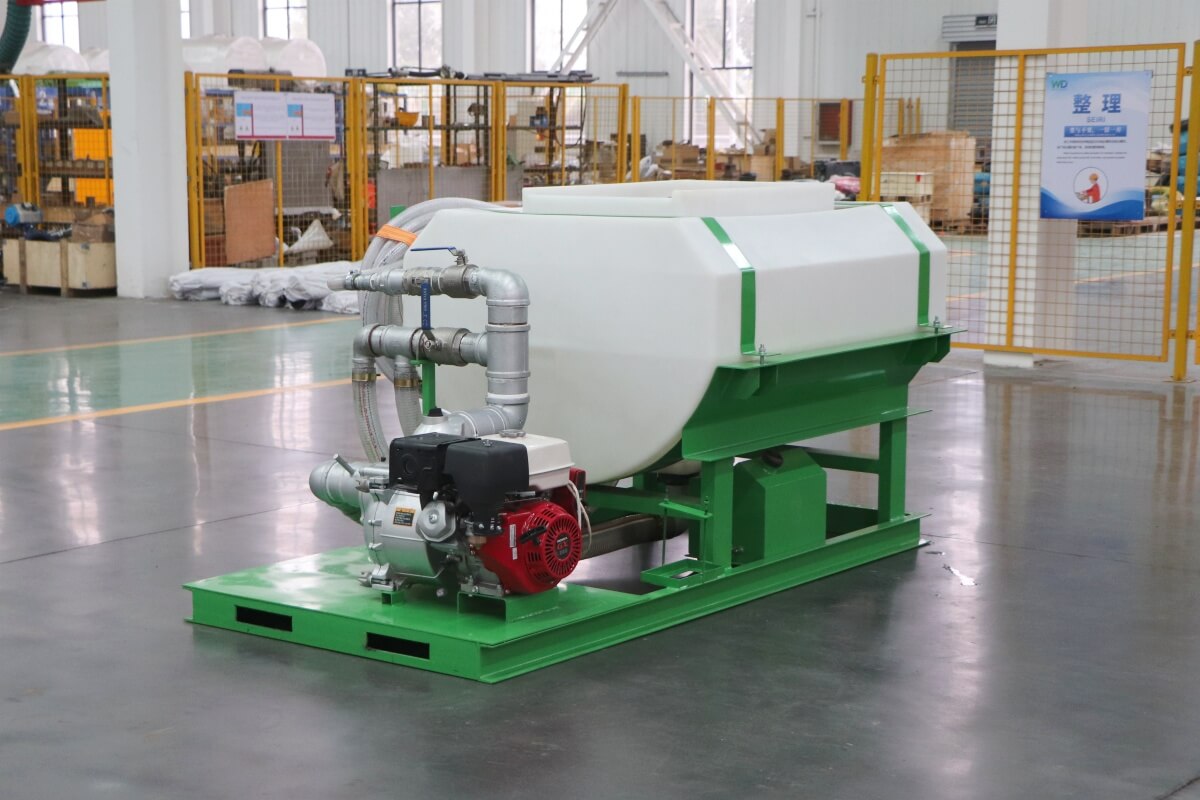
Plastic tank hydro seeding machine
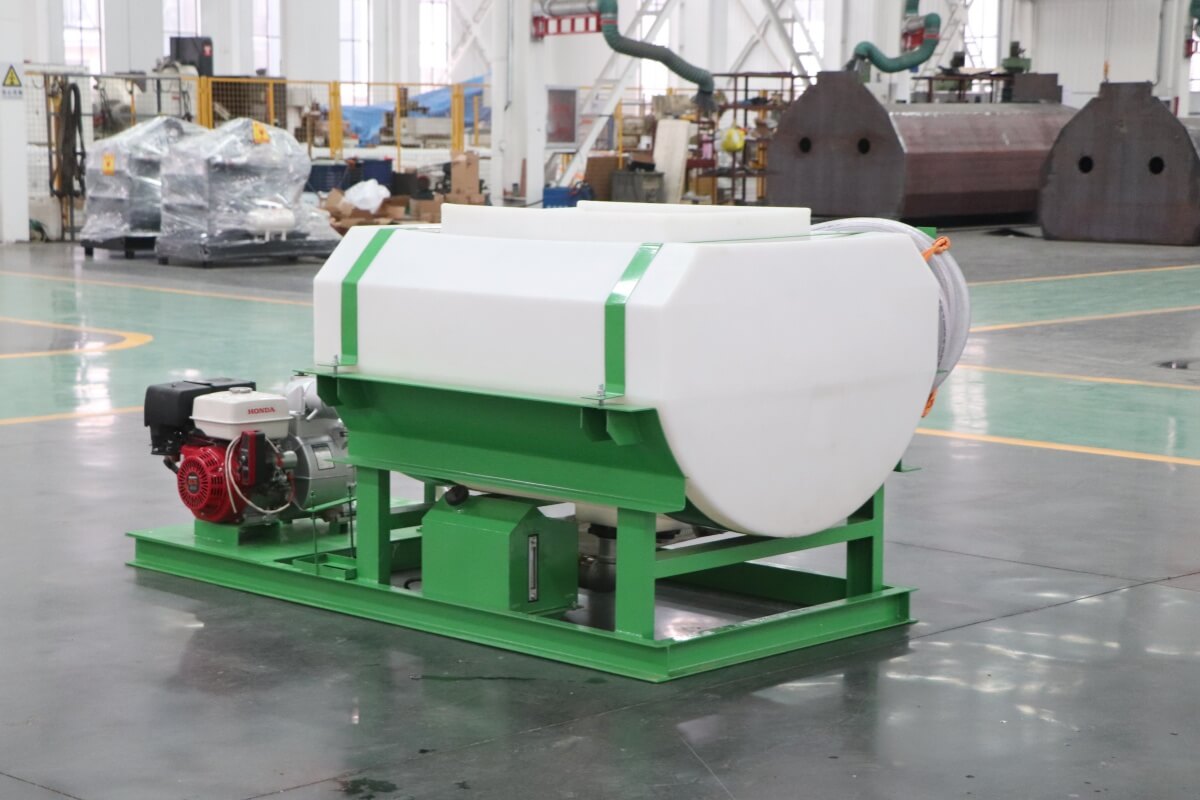
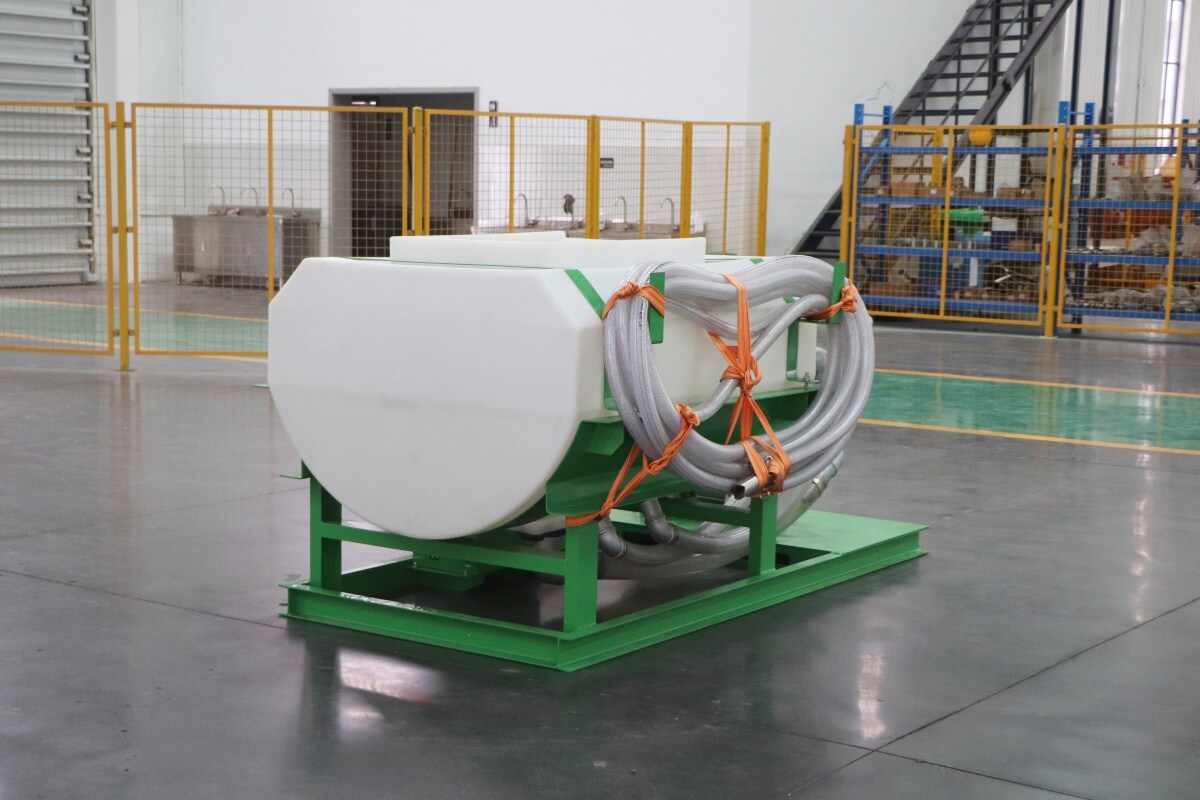
Plastic tank hydro seeding machine uses a tank made of plastic (typically high-density polyethylene or HDPE) instead of traditional materials like steel or fiberglass. These machines are used to spray a slurry mixture of seed, mulch, fertilizer, water, and sometimes tackifiers (to prevent runoff) onto soil for landscaping, erosion control, and revegetation projects.
Gaode Equipment is a professional hydroseeding machine manufacturer and supplier, offering custom plastic tank hydroseeding machines. A plastic tank hydroseeding machine is a device used for efficient seeding and revegetation. Its core function is to mix seeds, fiber mulch (cover), fertilizer, water, and a binder into a slurry, which is then sprayed onto the soil surface using a high-pressure pump.
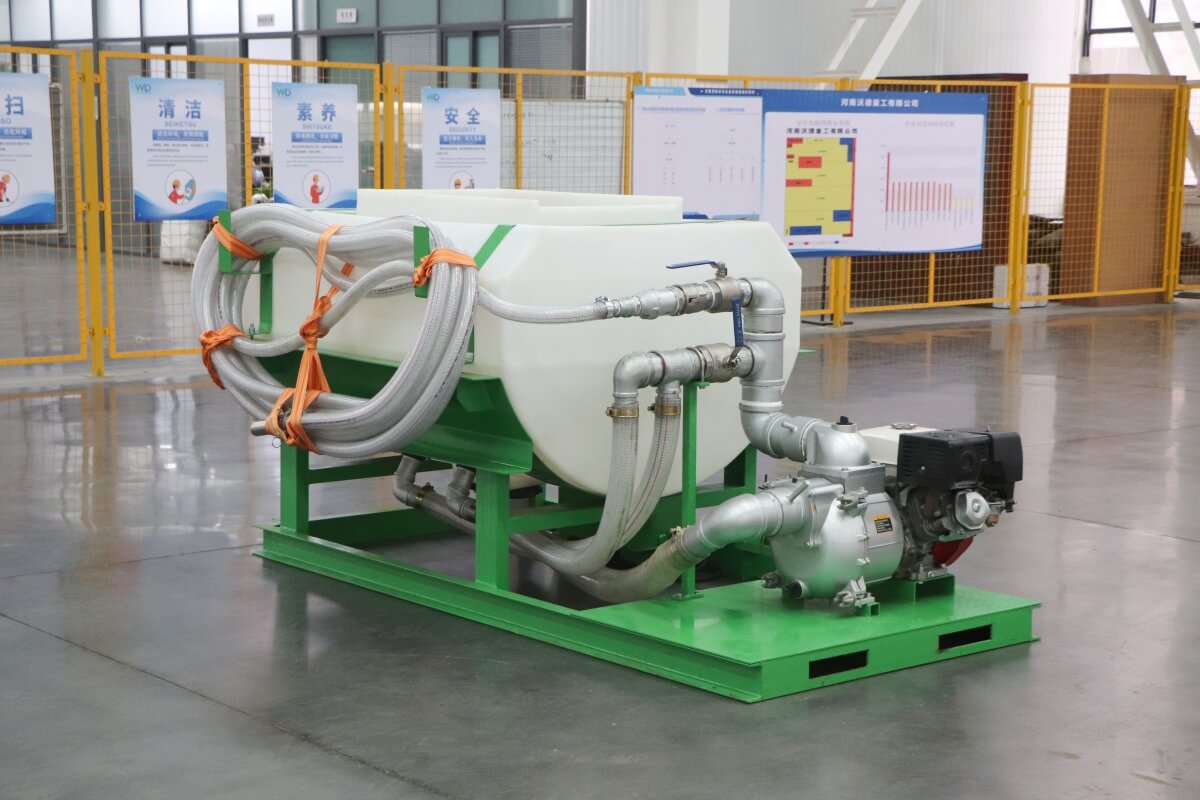
Structure and Working Principle of a Plastic Tank Hydro Seeding Machine:
1. Plastic Tank
Material: Made of high-strength engineering plastic (such as polyethylene (PE) or polypropylene (PP), it is acid, alkali, UV, and impact resistant. It weighs only one-third of a metal tank, making it easy to transport and move.
Capacity: Common sizes range from 500 to 3000 gallons (approximately 1893 to 11,356 liters), depending on the project scale.
Design: Typically cylindrical or rectangular, with a wide top inlet for convenient addition of materials such as wood fiber, grass seeds, and fertilizer. The bottom outlet is connected to a hydraulic pump for rapid material delivery.
2. Hydraulic Mixing System
Agitator: A hydraulic motor drives a double-blade or turbine-type agitator with an adjustable speed (typically 50-150 rpm), ensuring thorough mixing of seeds, fertilizer, and water to prevent sedimentation.
Circulation: Some models are equipped with a hydraulic circulation pump that draws materials from the bottom to the top, creating a three-dimensional agitation process and improving mixing uniformity.
Independent Control: The agitator and seeding pump operate independently, allowing users to flexibly adjust the agitation time based on the material state and avoid over-mixing that can damage seeds.
3. Seeding System
Hydraulic Pump: A centrifugal pump is used, capable of pressures of 100-300 psi (approximately 0.7-2.1 MPa) and a flow rate of 100-400 gpm (approximately 378-1514 L/min), supporting long-range seeding (up to 230 feet/70 meters).
Spray Gun: Adjustable nozzle angle and flow rate to accommodate varying slopes (e.g., 30°-90° slopes) and material characteristics (e.g., wood fiber requires high-pressure seeding). Piping: High-pressure hoses are typically 50-100 feet (approximately 15-30 meters) in length. Some models are equipped with quick connectors for quick replacement of spray guns or extension of the hose.
Technical Advantages of Plastic Tank Hydro Seeding Machines:
1. Lightweight and Corrosion-Resistant
Plastic tanks are 40%-60% lighter than metal tanks, reducing transportation costs and making them particularly suitable for locations requiring manual handling, such as mountainous areas and on green roofs.
Their acid and alkali resistance allows for long-term storage of fertilizer solutions, eliminating the risk of leaks associated with corrosion in metal tanks.
2. Efficient Mixing and Seeding
The hydraulic mixing system quickly breaks up wood fiber clumps, ensuring even seed distribution and improving germination rates. For example, in mine reforestation projects, evenly mixed grass seeds and wood fibers form a protective layer, reducing soil erosion.
The high-pressure seeding function allows material to be sprayed evenly onto steep slopes, achieving coverage 3-5 times higher than manual broadcasting.
3. Convenient Operation
The hydraulic system features an integrated control panel, allowing users to adjust mixing speed and seeding pressure with knobs, simplifying operation.
Plastic tank hydro seeding machine application scenarios:
1. Landscaping and landscape construction
Residential lawn construction: Suitable for new villas and residential communities, quickly establishing uniform, dense lawns.
Parks and green spaces: Rapidly greening large areas such as urban parks, squares, and riverside green belts.
Rooftop greening: The lightweight design is suitable for operation on rooftops or elevated structures, reducing load-bearing pressure.
Advantages: Uniform spraying, rapid completion, and reduced manual seeding costs.
2. Road and infrastructure projects
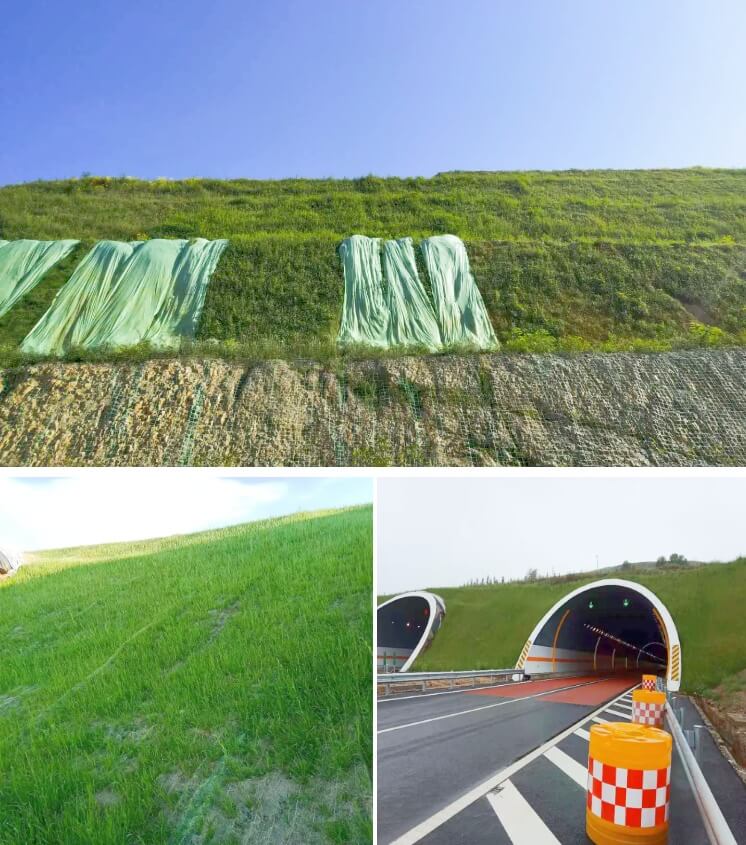
Highway slope greening: Prevents soil erosion and beautifies the road environment.
Railway vegetation restoration: Stabilizes slopes, reduces noise and visual pollution.
Municipal road medians and shoulder greening.
Advantages: Can be sprayed on steep slopes and difficult-to-access areas; plastic tanks are chemically resistant and suitable for long-term use.
3. Ecological restoration and environmental protection
Mine reforestation: Replants abandoned mining areas and restores ecosystems. Quarry/Soil and Stone Quarry Ecological Management: Control dust and prevent rainwater erosion.
Riverbank/Lakebank Slope Protection: Enhance soil stability and prevent erosion.
Advantages: Can add water-retaining agents and soil conditioners, suitable for poor soils; the spray layer forms a protective film to reduce rainwater erosion.
4. Agriculture and Pasture Improvement
Degraded Pasture Restoration: Rapidly sow drought-tolerant and cold-resistant grass seeds.
Orchard/Woodland Intercropping and Greening: Prevent soil erosion and increase organic matter.
Windbreak and Sand Fixation Forest Construction: Establish a vegetation barrier in desertified areas.
Advantages: Customizable grass seed mixes to suit different climate and soil conditions.
5. Emergency and Post-Disaster Recovery
Post-Landslide Vegetation: Rapidly cover exposed ground and prevent secondary disasters.
Post-Fire Forest Restoration: Accelerate natural succession.
Post-Flood Soil Stabilization
Advantages: High mobility and rapid deployment, suitable for emergency ecological restoration missions. 6. Sports Field Construction
Golf courses: Rapidly establish seeding around greens and in rough areas.
Soccer fields and stadium turf: Evenly seed the lawn to improve the quality of the finished lawn.
Horsetracks and equestrian venues: Establish a trampling-resistant grass seed.
Advantage: Precisely control seed density and cover thickness.