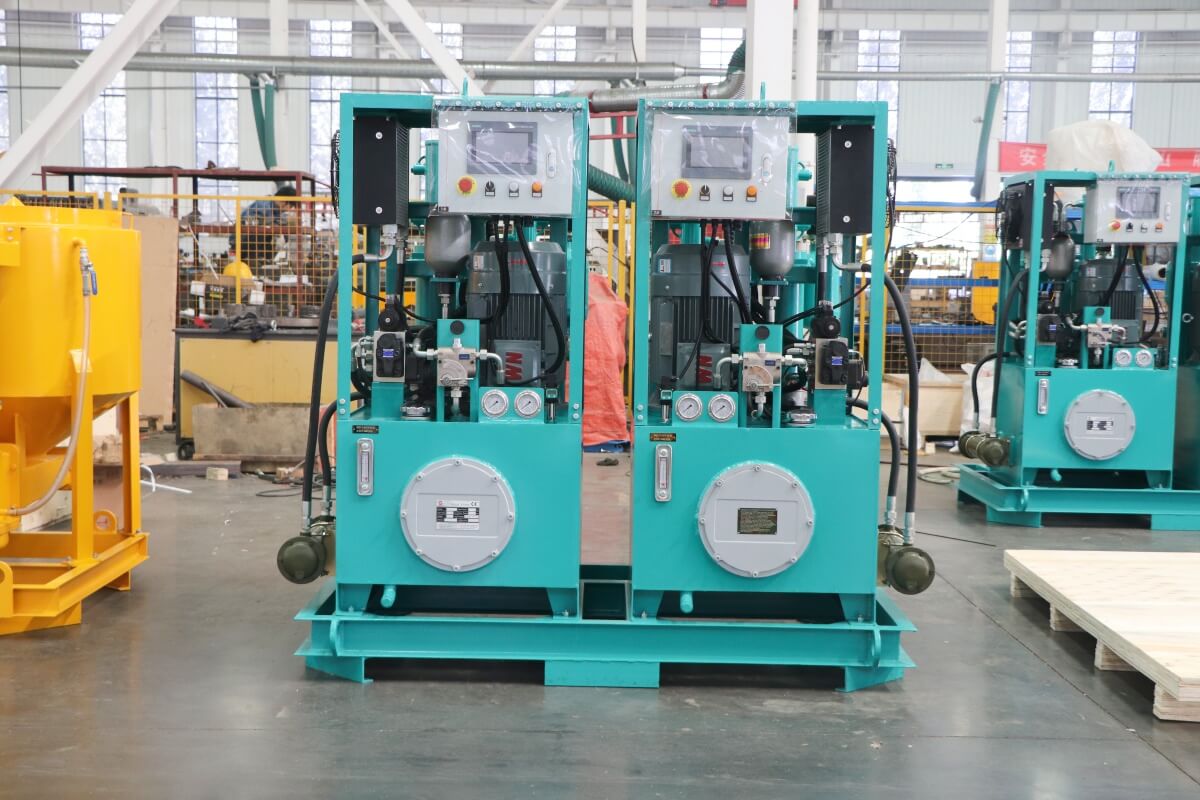
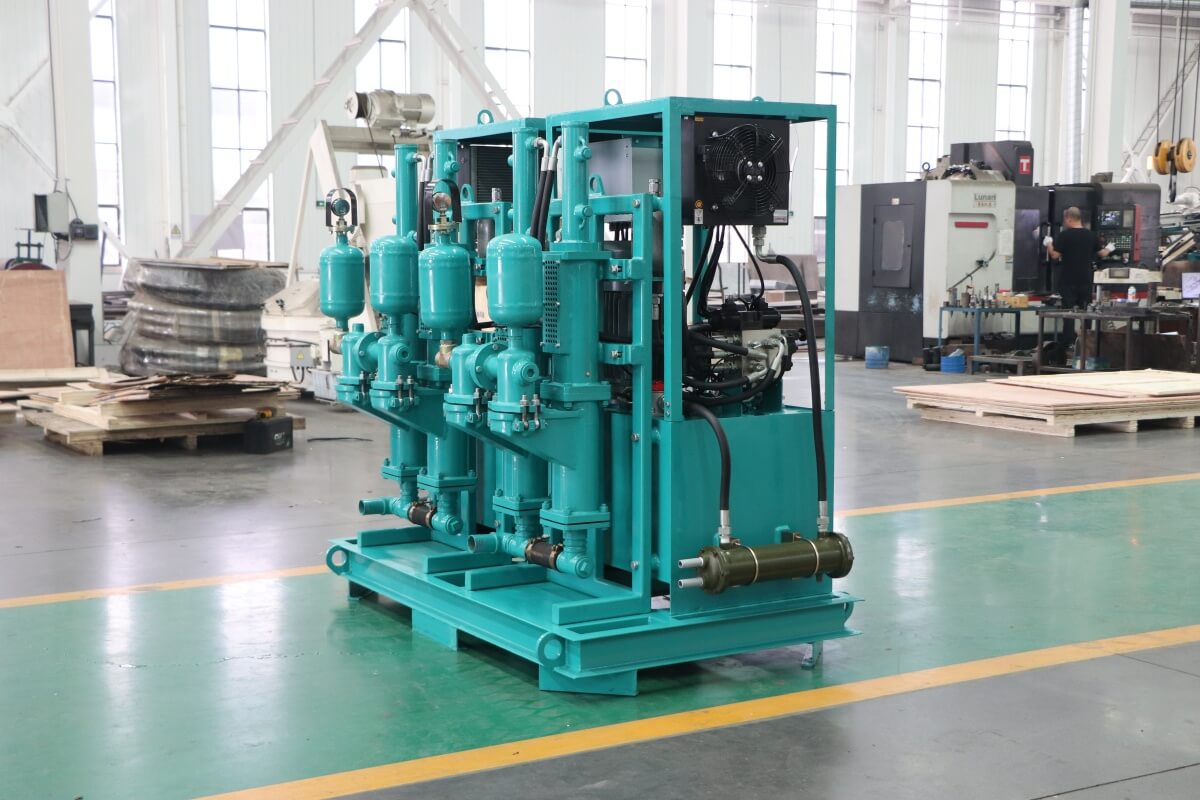
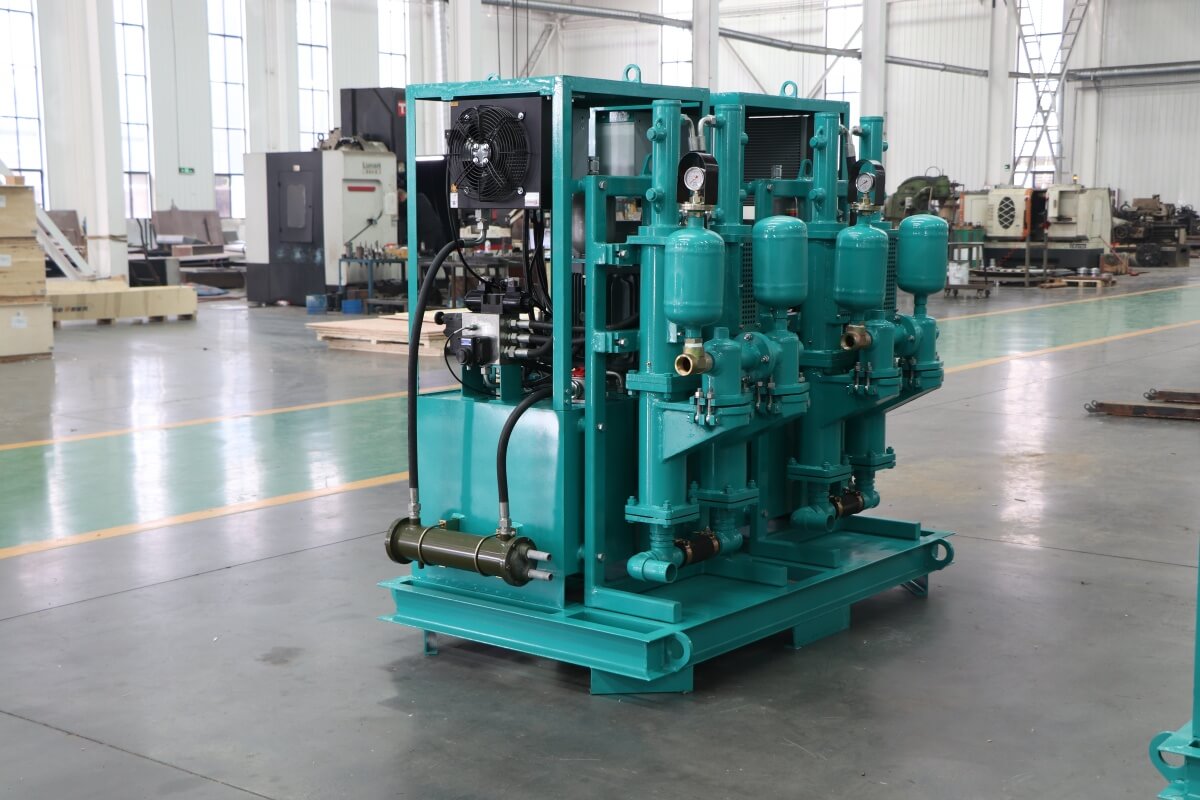
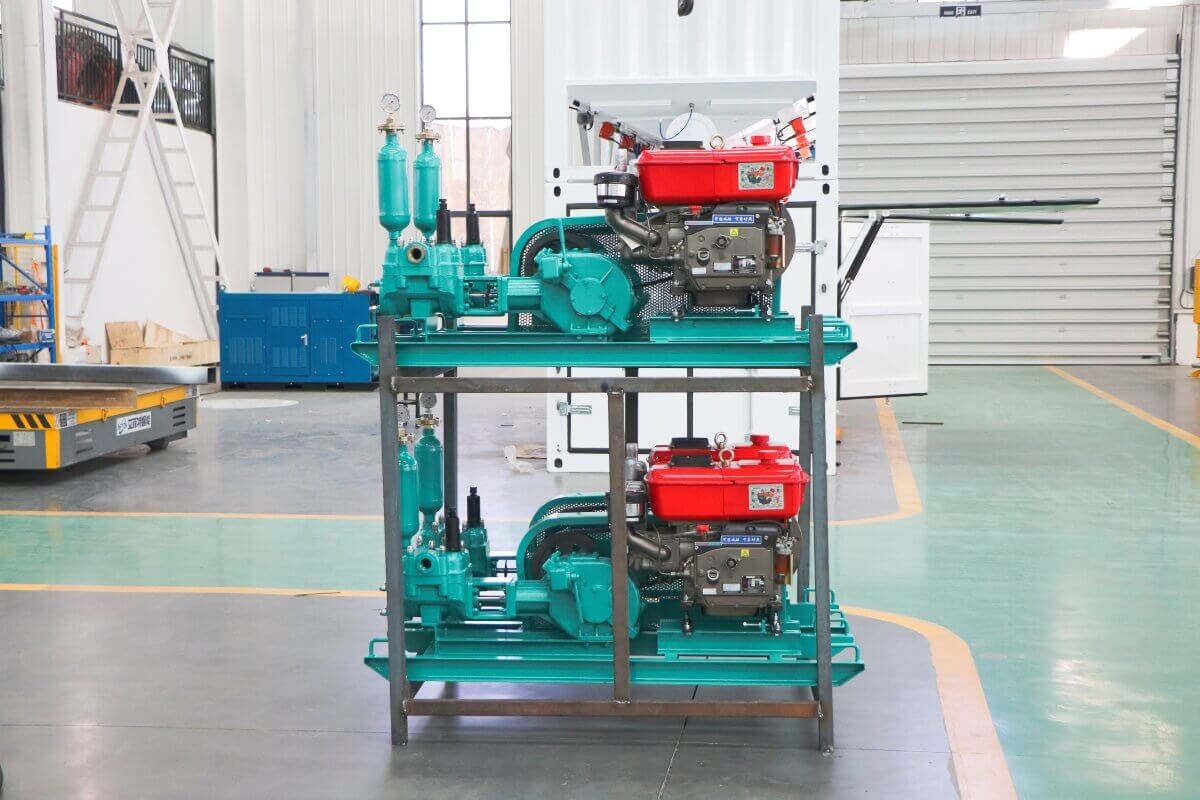
The double-plunger bentonite grout pump is a positive-displacement grouting unit specifically designed for high-viscosity bentonite slurries. It achieves continuous suction and discharge through the alternating reciprocating motion of two plungers, significantly reducing pressure pulsation compared to single-plunger pumps, and serves as core grouting equipment for tunneling, mining, and foundation reinforcement projects. Applications of the double-plunger bentonite grout pump: Synchronous and secondary backfill grouting for shield tunnels, enabling precise control of surface settlement Grouting for diaphragm walls and dam curtains to stabilize geological structures and prevent water seepage Reinforcement and water-blocking in fractured rock strata within underground mines; suitable for explosion-proof operating environments Long-distance transport of bentonite friction-reducing slurry for trenchless pipe-jacking projects Grouting for micropiles and anchor rods; foundation reinforcement in confined spaces
The plunger grout pump for tunneling is a core piece of high-pressure grouting equipment specifically designed for tunnel construction; it ensures the stable delivery of various engineering slurries—such as cement and bentonite slurries—and meets the requirements of grouting operations throughout the entire tunneling process. Applications for the plunger grout pump: Synchronous and secondary grouting behind shield tunnel segments to fill the gap between segments and the surrounding ground, thereby controlling surface settlement Pre-grouting at the tunnel face to reinforce fractured surrounding rock, seal off groundwater, and prevent sudden water or mud inrushes Repairing cracks in subway tunnel segments and filling voids behind the lining to enhance overall structural stability Grouting for slope anchor bolts and fore-poling (small conduit) pre-support at tunnel portals to stabilize loose ground at the entrance/exit
The plunger grout pump for bentonite slurry is a specialized piece of grouting equipment designed to transport high-concentration bentonite slurries with high solids content. It is engineered to accommodate the thixotropic gelling properties of bentonite, thereby avoiding issues such as rapid wear and insufficient startup pressure often encountered with standard grouting pumps.
The medium-pressure cement grouting pump features a single-piston, double-acting design with a gear reducer, a compact structure, and is suitable for medium-scale grouting projects such as soil nailing and anchor bolting. Typical applications include: 1. Foundation reinforcement: Injecting cement grout into soft soil foundations to improve bearing capacity and prevent settlement. 2. Tunnels and underground engineering: Used for filling voids behind tunnel linings, reinforcing rock strata, and waterproofing. 3. Slope stabilization: Grouting and reinforcing landslides or unstable rock strata to enhance slope stability. 4. Concrete structure repair: Repairing defects such as cracks and hollow areas to improve structural durability. 5. Water conservancy projects: Construction of dam anti-seepage walls, dam reinforcement, and foundation treatment.
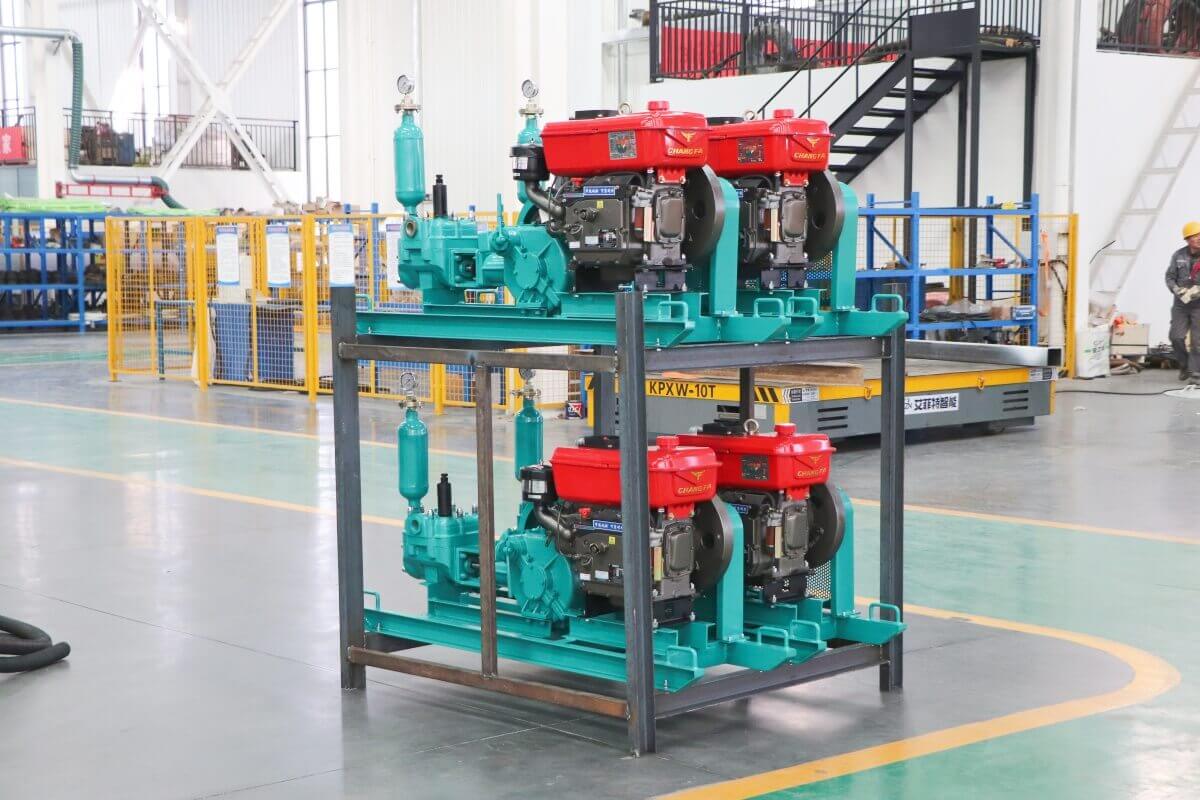
A diesel cement grout injection pump is a device that uses a diesel engine as a power source to inject cement grout or other grouting materials into strata, fissures, or structures. It mainly consists of a power system, a pumping system, a mixing system, and a control system, and features high pressure, large flow rate, and strong adaptability.
Grouting pumps inject cement-based or chemical grout into foundation cracks, pores, or weak layers under high pressure, forming a solidified mass to enhance the foundation’s bearing capacity. Its reinforcement principles encompass the following aspects: Permeation consolidation: The grout fills soil pores, increasing density through cementation; suitable for highly permeable strata such as sandy soil and silt. Fracturing reinforcement: High-pressure grout fractures the soil, forming a dendritic grout vein network, improving the overall strength of the foundation; commonly used for soft clay or collapsible loess. Compaction grouting: High-pressure compaction of the surrounding soil creates a dense zone; suitable for saturated soft clay or artificial fill.
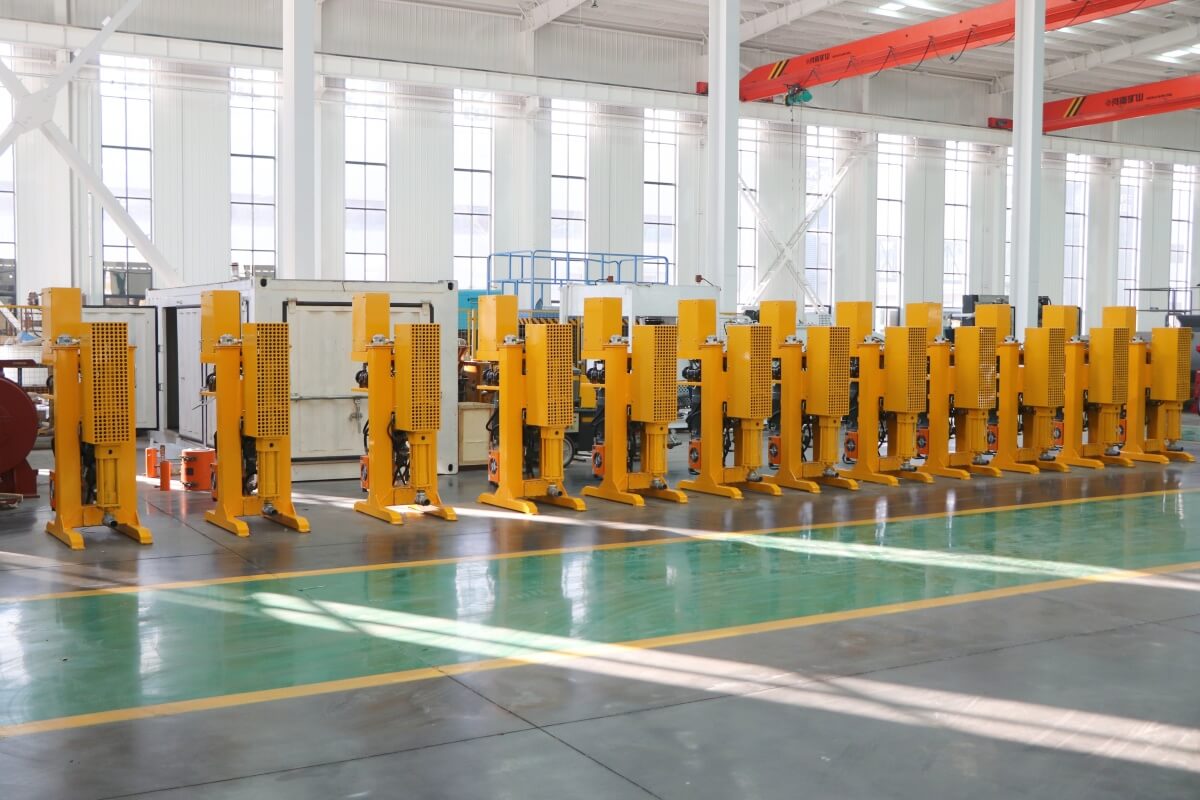
A high-pressure vertical grout pump is a specialized positive displacement pump designed to inject grout (a mixture of cement, water, and often additives) into cracks, voids, and fissures under high pressure. Applications: Soil nailing & ground stabilization. Tunneling and mining grouting. Dam and foundation repair. Post-tensioning duct grouting. Void filling beneath slabs or structures.
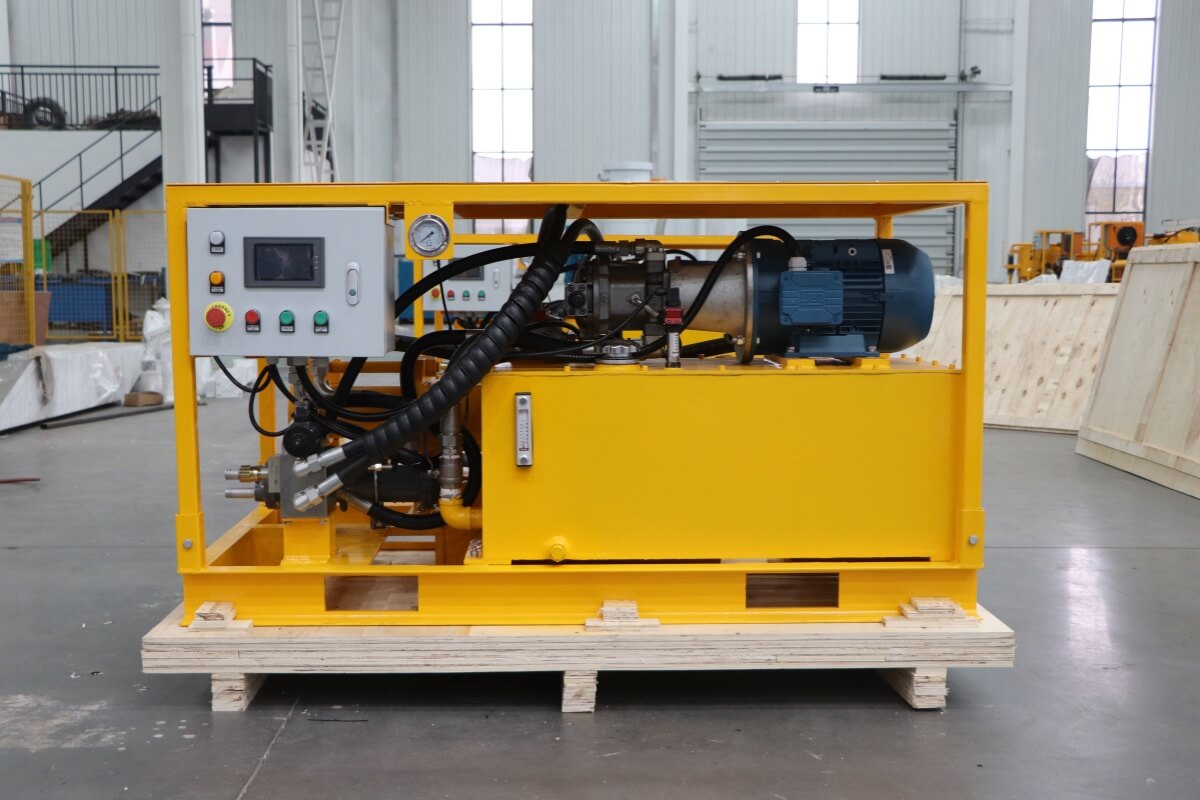
A hydraulic high-pressure horizontal cement grouting pump is a specialized device driven by a hydraulic system to inject cement slurry and other readily setting materials into rock formations, soil cracks, or gaps in building structures at high pressure. The core principle is based on hydraulic transmission and the reciprocating motion of a plunger: Hydraulic drive: An electric motor drives a gear pump, which delivers high-pressure oil through a relief valve and into a hydraulic reversing valve block, controlling the reciprocating motion of the hydraulic cylinder. Synchronized grouting: The hydraulic cylinder and the working cylinder move synchronously, with suction and discharge valves at each end. This allows for single-liquid or dual-liquid grouting (e.g., a mixture of cement slurry and water glass).
*Please enter a message to us