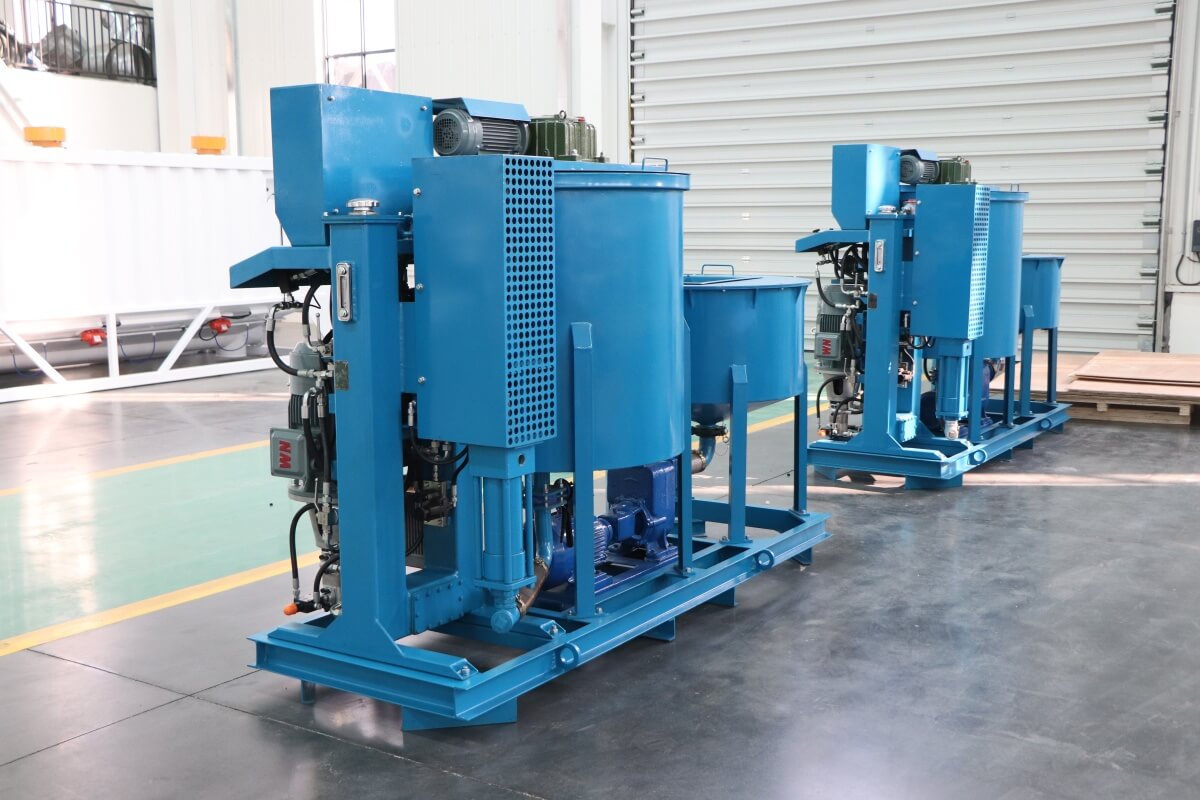
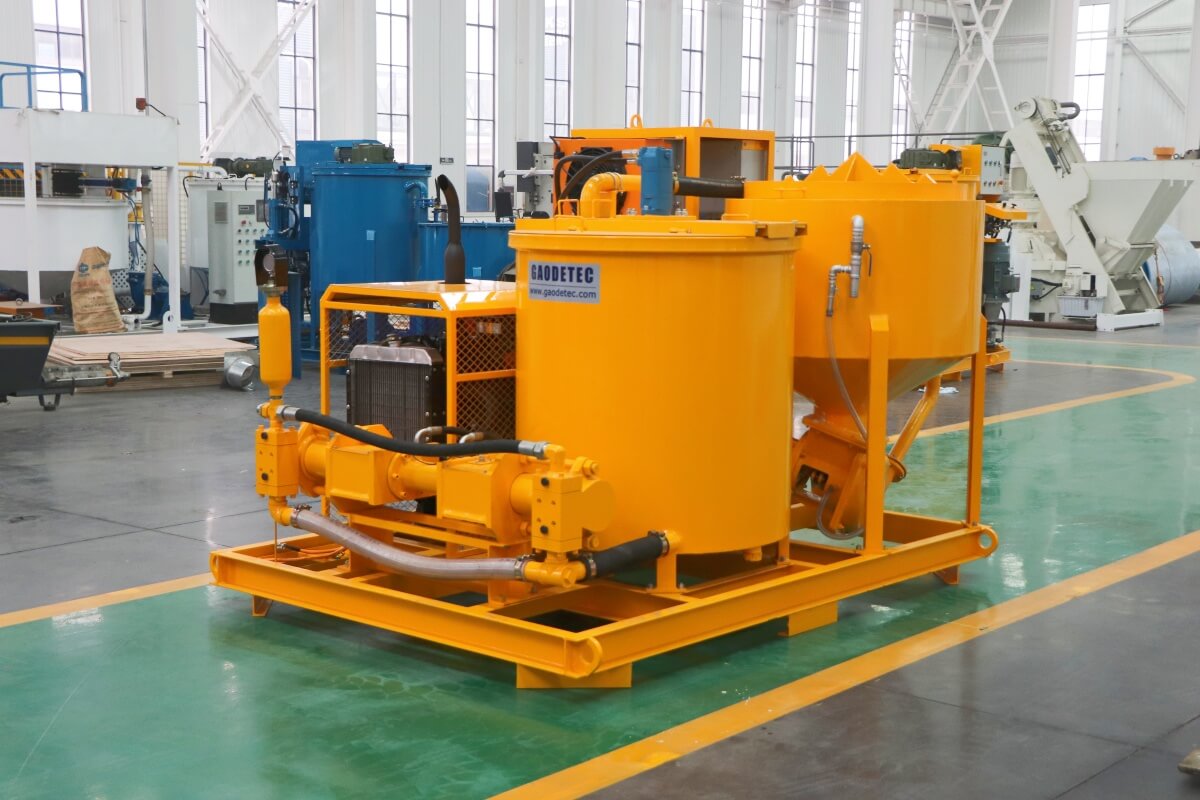
A cement bentonite grout mixing plant is a specialized system designed to produce homogeneous, stable slurries used primarily in geotechnical and civil engineering applications such as: Slurry walls (diaphragm walls), groundwater cutoff, tunneling and shaft sealing, landfill containment barriers, and soil nailing and ground improvement. Working Principle: Premixing Stage: Bentonite and water are thoroughly dispersed under low-speed stirring to form a colloidal solution. Main Mixing Stage: Cement and additives are added, and homogeneous mixing is achieved through high-speed shear mixing. Transportation and Storage: The mixed slurry is transported to the construction site via a pumping system or temporarily stored in mixing tanks to maintain its fluidity.
The grout pump and mixing station is an integrated device combining a mixer, mixing tank, and grouting pump. It injects cement-based or chemical grout into strata, structural fissures, or soil and rock masses under high pressure to achieve reinforcement, seepage prevention, or filling functions. Its working principle can be divided into three stages: 1. Cement grout preparation: A high-speed vortex mixer rapidly mixes cement, bentonite, and water, forming a homogeneous grout within 10 seconds, preventing particle sedimentation. 2. Cement grout storage: The mixing tank continuously agitates the grout to prevent solidification and ensure a continuous supply. 3. High-pressure grouting: A hydraulically driven pump generates high pressure through piston or plunger movement, injecting the grout into the target area. The pressure range is 0-45 Bar (some models reach 0-100 Bar), and the flow rate is 0-100 L/min.
*Please enter a message to us