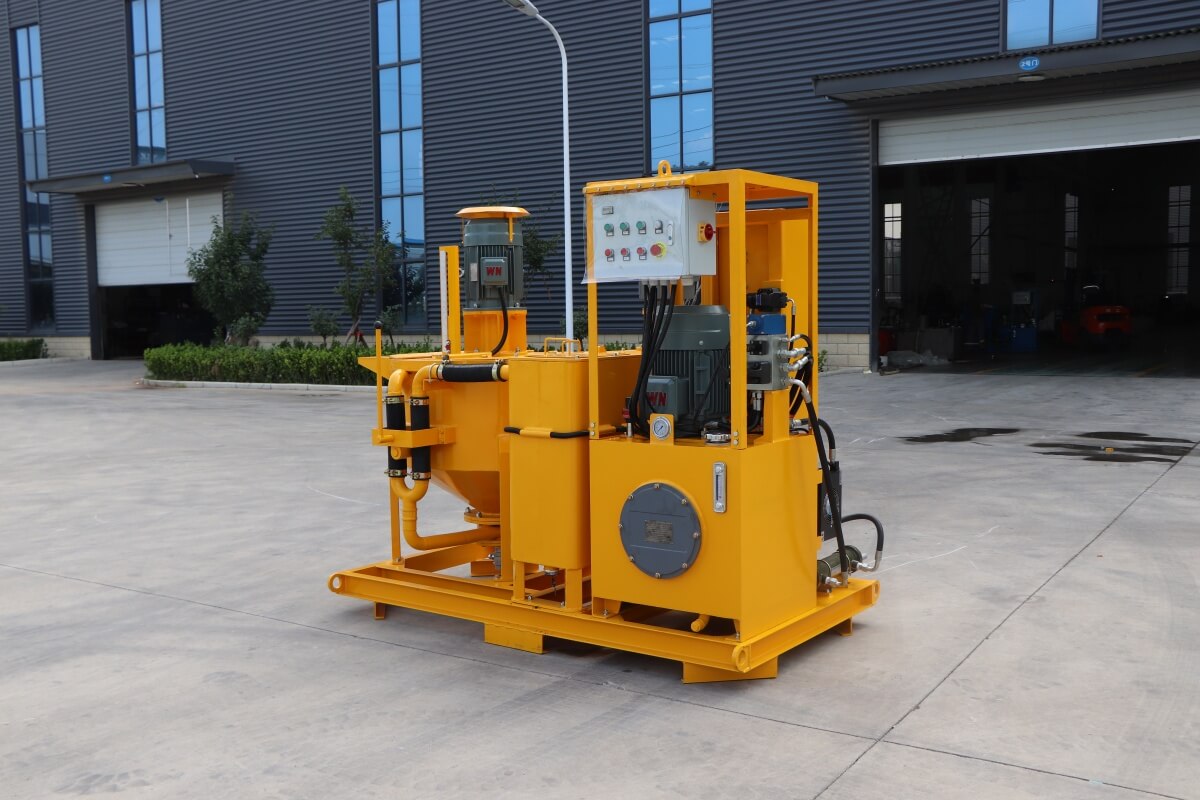
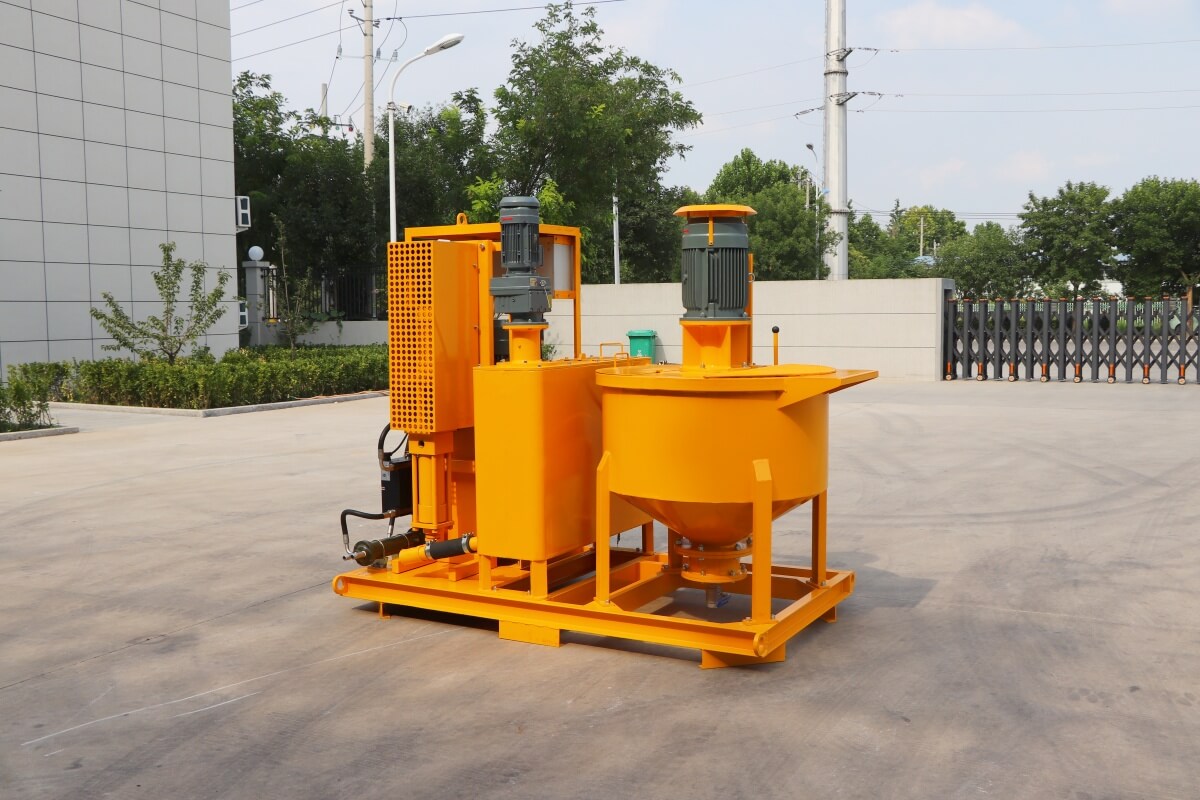
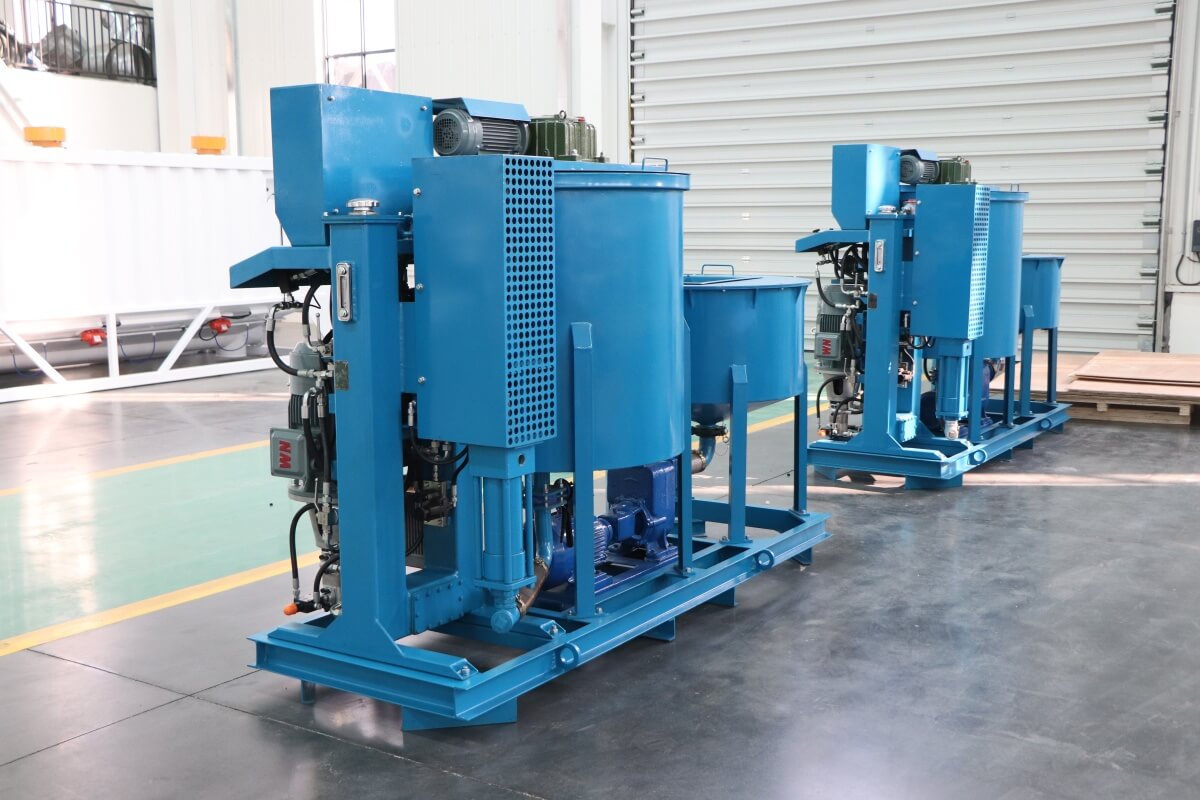
Cement grouting equipment is used for the preparation, storage, continuous agitation, and pressure delivery of cement grout. A well-configured setup—comprising a grout mixer, storage/agitation tank, and grout pump—creates a continuous, stable grouting system that ensures a reliable supply of grout for micropiles of varying depths, diameters, and construction methods. Micropiles are characterized by small diameters, flexible construction, high load-bearing capacity, and strong site adaptability; they are widely used for building underpinning, structural reinforcement, bridge foundation repair, and piling in confined spaces. Cement grouting is a critical step in micropile construction, as grout quality, injection pressure, and the actual volume injected directly influence pile strength and the bond between the pile and the surrounding soil.
The High-Shear Colloidal Grout Mixer Pump Unit is a piece of high-efficiency grouting equipment specifically designed for cement-based grouts. Utilizing a high-speed rotating high-shear impeller or centrifugal dispersion device (operating at speeds of 2,000–3,000 rpm), it thoroughly disperses materials such as cement and fly ash into their finest particles, ensuring complete wetting. This process significantly enhances grout stability while minimizing the risks of bleeding and segregation. These units are widely used in heavy-duty construction applications—including dams, tunnels, post-tensioned prestressing projects, underground mining, and geotechnical anchoring—and are compatible with various grout materials, such as neat cement grout, bentonite slurry, and micro-cement grout.
The medium-pressure cement grouting pump features a single-piston, double-acting design with a gear reducer, a compact structure, and is suitable for medium-scale grouting projects such as soil nailing and anchor bolting. Typical applications include: 1. Foundation reinforcement: Injecting cement grout into soft soil foundations to improve bearing capacity and prevent settlement. 2. Tunnels and underground engineering: Used for filling voids behind tunnel linings, reinforcing rock strata, and waterproofing. 3. Slope stabilization: Grouting and reinforcing landslides or unstable rock strata to enhance slope stability. 4. Concrete structure repair: Repairing defects such as cracks and hollow areas to improve structural durability. 5. Water conservancy projects: Construction of dam anti-seepage walls, dam reinforcement, and foundation treatment.
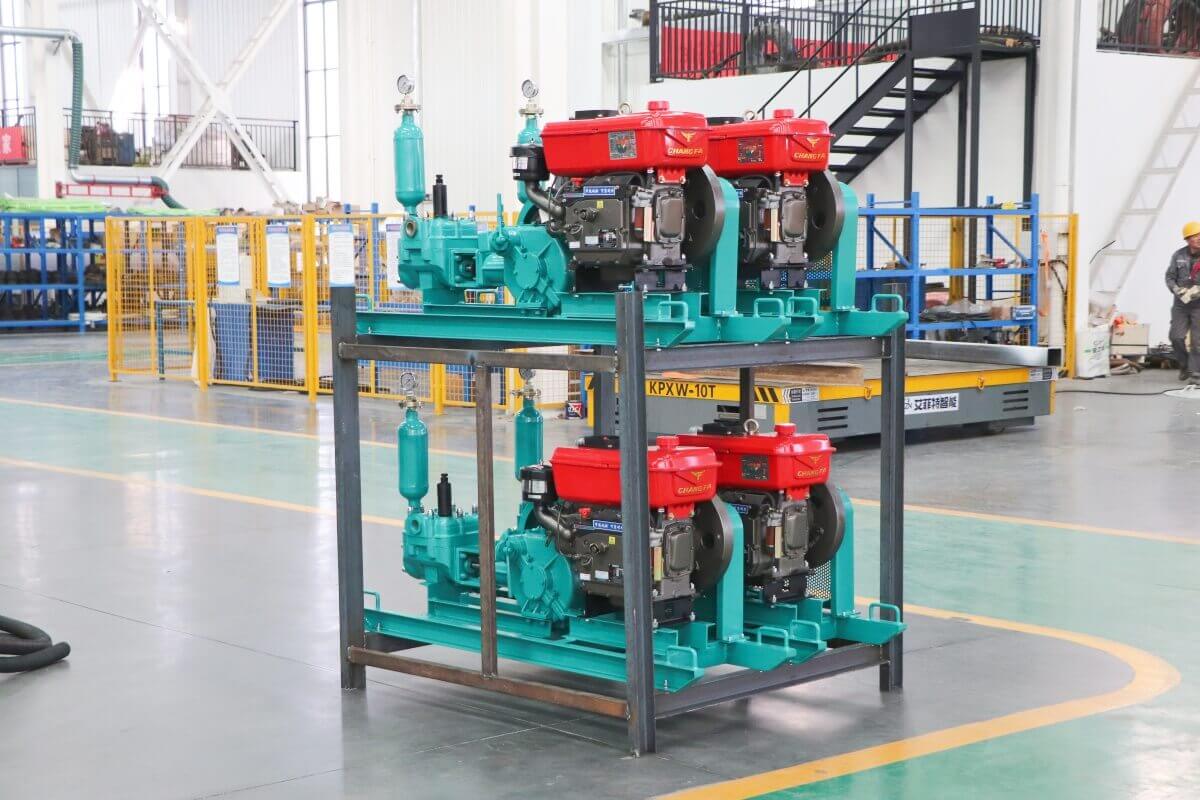
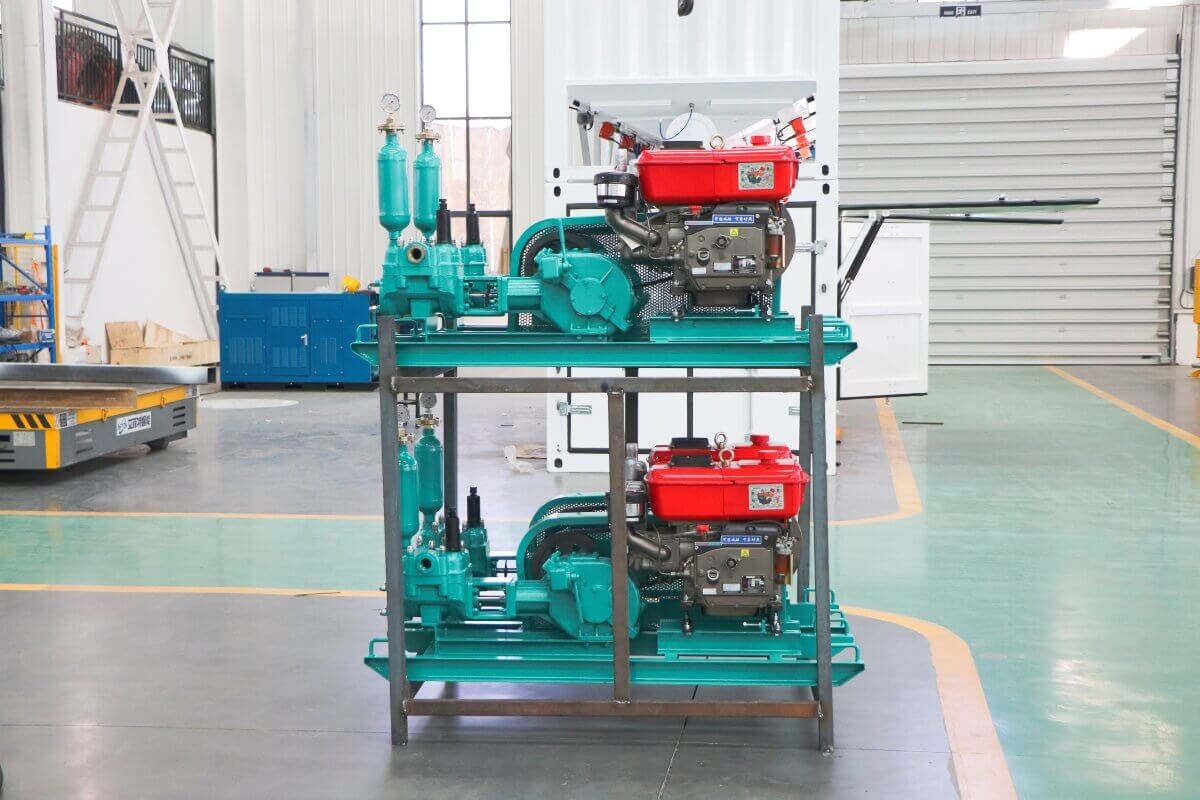
A diesel cement grout injection pump is a device that uses a diesel engine as a power source to inject cement grout or other grouting materials into strata, fissures, or structures. It mainly consists of a power system, a pumping system, a mixing system, and a control system, and features high pressure, large flow rate, and strong adaptability.
A cement bentonite grout mixing plant is a specialized system designed to produce homogeneous, stable slurries used primarily in geotechnical and civil engineering applications such as: Slurry walls (diaphragm walls), groundwater cutoff, tunneling and shaft sealing, landfill containment barriers, and soil nailing and ground improvement. Working Principle: Premixing Stage: Bentonite and water are thoroughly dispersed under low-speed stirring to form a colloidal solution. Main Mixing Stage: Cement and additives are added, and homogeneous mixing is achieved through high-speed shear mixing. Transportation and Storage: The mixed slurry is transported to the construction site via a pumping system or temporarily stored in mixing tanks to maintain its fluidity.
*Please enter a message to us